
DuraFlex Chimney Sweep in Parker: A Homeowner’s Guide
A flexible stainless liner dropped into an uncleaned, unrepaired flue is like caulking over a crack. It looks finished until it isn’t. In our experience, most liner jobs that fail early weren’t bad products. They were bad installations on flues nobody prepared. If you’re pricing a DuraFlex liner in Parker, the part you need to understand first isn’t the alloy or the warranty sheet. It’s the sweep and inspection work that has to happen before the liner goes in. That’s what this guide covers.
What Is DuraFlex, and Why Does the Brand Matter in Parker?
DuraFlex is a flexible stainless liner system built from 316Ti stainless alloy, a grade chosen for its resistance to heat and to the acidic moisture that combustion creates. It’s engineered as a complete system, sized and supported for the flue it goes into. Generic flex liner sold by the foot is not the same thing, even when it looks similar coiled on a truck bed.
The distinction matters more in Parker than in milder climates. Parker sits high and dry, and our freeze-thaw cycles are hard on masonry. Water gets into cracks and small gaps, freezes overnight, expands, and pushes the masonry apart a little more each season. A liner that isn’t correctly insulated and properly supported can’t buffer that movement, and the flue around it keeps deteriorating. The liner survives. The chimney doesn’t.
We install and work with professional-tier liner brands, including DuraFlex and Olympia Chimney, because those are the systems specified by people who work on chimneys every day rather than the substitutes sold at big-box stores. That’s not a knock on saving money. It’s an acknowledgment that a liner is buried inside your chimney for years, and the cost of getting it wrong shows up long after the receipt is filed.
Why Sweeping and Inspection Must Come Before Any Liner Goes In
A DuraFlex liner installed over a dirty flue traps creosote and debris between the liner and the chimney wall. A liner installed over damaged mortar leaves broken joints behind it where they can’t be reached or repaired. Either way, you’ve paid for a new liner and inherited an old problem.
The order of operations is not negotiable, and it’s the same whether the job is a sweep or a full reline:
- Sweep first. Every flue surface gets brushed clean so the liner contacts bare masonry, not a layer of soot and glaze.
- Inspect second. A camera inspection shows the condition of the flue tiles, mortar joints, and any offsets or breaches. We follow NFPA 211 inspection-standard practices here, because a liner decision made without that view is a guess.
- Repair third. Cracked mortar joints, spalled tile, and gaps get addressed before anything flexible goes down the flue.
- Then, and only then, the liner.
Skipping step one or two is where early liner failures come from. If a contractor quotes you a liner without ever putting a camera in the flue, that’s your signal to slow down. On the sweep side, our chimney sweep work is where every liner conversation in Parker should start.
The Prep Work a Qualified Sweep Actually Does
Before a DuraFlex liner goes in, three things need to happen, and each one has a visible result you can check.
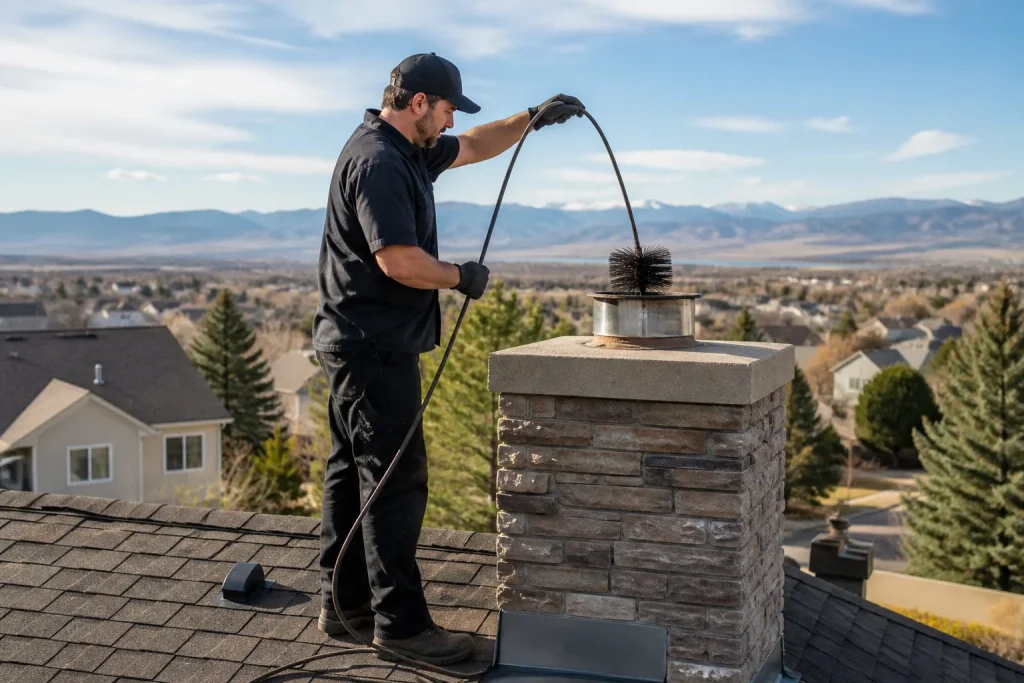
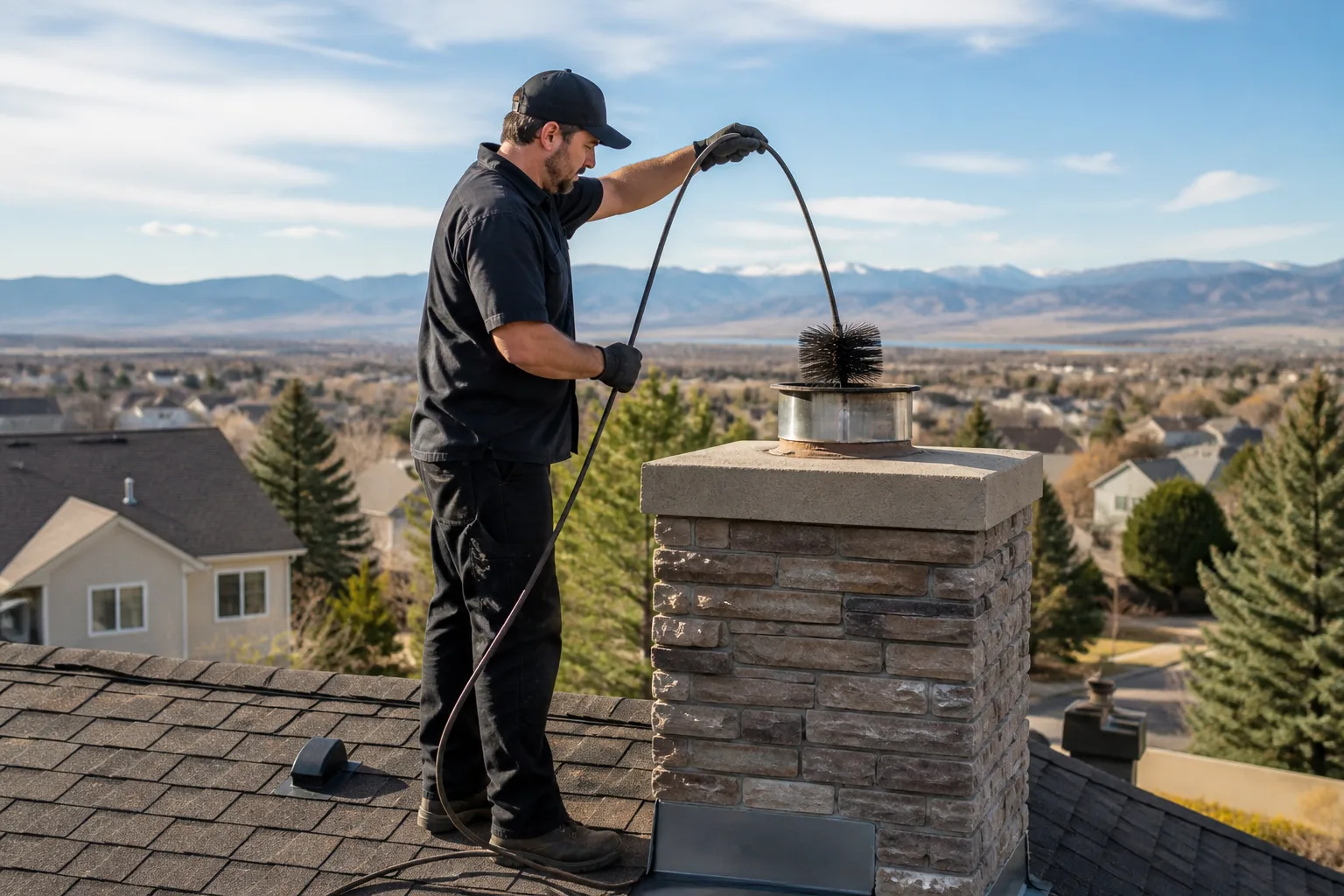
Brushing. The flue gets swept top to bottom with the right brush for the flue’s material. A chimney professional matches the brush to the job. A generalist tends to grab whatever’s on the truck.
Camera inspection. A camera run through the flue reveals the interior condition: mortar joints, cracks, offsets, and anything the sweep couldn’t see from the firebox. We treat inspection as a prerequisite to recommending any repair, because that’s the only way to know what you’re actually dealing with. If you want the inspection on its own, that’s fine. It’s a service in itself.
Mortar repair. Cracked or missing mortar joints get repointed before the liner is installed. Some flues with surface damage can be restored with HeatShield resurfacing rather than fully relined, which extends the useful life of the existing flue. Not every flue needs it. The camera tells you which one you have.
We’ve seen flues where all three steps were skipped and the liner was crammed in anyway. The homeowner found out months later when the fire wouldn’t draft properly. Chimney work done right is thorough. It isn’t fast, and it shouldn’t be.
How to Read a DuraFlex Installation Invoice
An invoice for DuraFlex liner installation in Parker should be specific enough that you can confirm you got what you paid for. Vague line items are a warning sign. Here’s what a solid invoice includes:
- Product name and alloy. It should say DuraFlex by name and specify the 316Ti alloy, not “stainless flex liner.”
- Linear footage. The length of liner installed, measured, not estimated.
- Sweep and inspection charges, listed separately. If they’re bundled into the liner price with no detail, you can’t tell whether the prep work happened.
- Insulation specification. What type and how much wrap was used, since insulation is part of how the liner performs through Parker’s cold snaps.
- Repairs performed before installation. Mortar repointing, HeatShield resurfacing, or other prep work itemized on its own line.
- Cap and crown. If the top of the chimney got a new cap or crown, it belongs on the invoice. Gelco and Famco caps are purpose-engineered chimney products, not hardware-store covers, and the invoice should name what was installed.
- The written estimate, matched to the final bill. The price is set per job by the written estimate. If the final number drifts from that estimate without a conversation, ask why.
If you’re also dealing with firebox or damper issues, fireplace repair is a separate line on the estimate, and it should be its own item rather than folded into the liner cost.
Questions to Ask Before You Sign
Any contractor can quote a liner. A chimney specialist can answer the questions that determine whether the job will hold up. Ask these before you sign:
- Will you sweep and camera-inspect the flue before quoting the liner? (If the answer is no, walk.)
- What happens if the inspection turns up cracked mortar or damaged tile? Is repair included, or will that be a change order later?
- Which alloy and which product line are you installing, and why that one for this flue?
- How will the liner be insulated and supported for a Parker winter?
- Is the crown and cap part of this job, or will I need a second contractor for the top of the chimney?
A handyman who “does chimneys too” usually can’t answer the second question, because it requires the inspection skill to see the problem coming. A generalist may also hand off the cap or crown work to someone else. We handle the whole chimney system from the firebox to the crown, so a liner job doesn’t leave you hunting for a second company. When the flue needs more than a liner, that flows into chimney repair rather than a separate call.
When to call a pro: if you’ve had a chimney fire, if you smell a strong creosote odor when the fire isn’t burning, if the flue has visible cracks from the firebox, or if a previous liner is sagging or disconnected. Those aren’t inspection-optional situations. Call a chimney professional before the next fire.
The Bottom Line
DuraFlex is a professional-tier liner system, and it performs as one when the flue underneath is clean, inspected, and repaired first. The sweep and inspection aren’t add-ons to the liner job. They’re the foundation of it. In Parker, our freeze-thaw winters make that prep work matter even more, because a liner can’t compensate for a chimney that’s quietly coming apart around it.
If you’d rather not sort through invoices and inspection reports alone, we’re happy to help. We install DuraFlex and Olympia Chimney liner systems, do the sweep and camera inspection first, and show you what we find before we recommend anything. If you’re in Parker and need help, Parker Chimney Sweep offers free estimates. Call (844) 443-4897. We answer 24/7. Fast dispatch from 7am to 7pm, Sunday through Friday.
Related services in Parker: Parker Chimney Sweep for the full chimney and fireplace service lineup.
Frequently Asked Questions
Liner installation is priced per job by a written estimate, because the flue’s condition and height dictate the work. The estimate is free, and you’ll see the sweep, inspection, repair, and liner as separate lines so you know exactly what you’re paying for. Call (844) 443-4897 for an exact quote. Estimates are free.
No, and you shouldn’t want one. A liner installed over creosote or damaged mortar traps the problem where it can’t be fixed. Any contractor who offers to skip the sweep and camera inspection is asking you to pay for a job that’s likely to fail early. The prep work is the job.
DuraFlex is a complete stainless liner system built from 316Ti alloy and engineered for the flue it goes into. Generic flex liner is often sized by the foot and sold without the same system specs. For Parker’s freeze-thaw winters, the difference shows up in how the liner holds up over years, not months.
A damaged or unlined flue lets creosote accumulate against masonry, raises the risk of a chimney fire, and can allow combustion gases to reach places they shouldn’t. The eventual repair is larger and costlier than a liner done now. We answer 24/7 if you have concerns. A call outside dispatch hours is booked into the next opening, Sunday through Friday, 7am to 7pm.
Written by the team at Parker Chimney Sweep.
Need Chimney Cleaning Help?
Call Parker Chimney Sweep - the local pro we connect you with is licensed and insured, here with fast help in Parker.
(844) 443-4897