
Last updated November 23, 2026
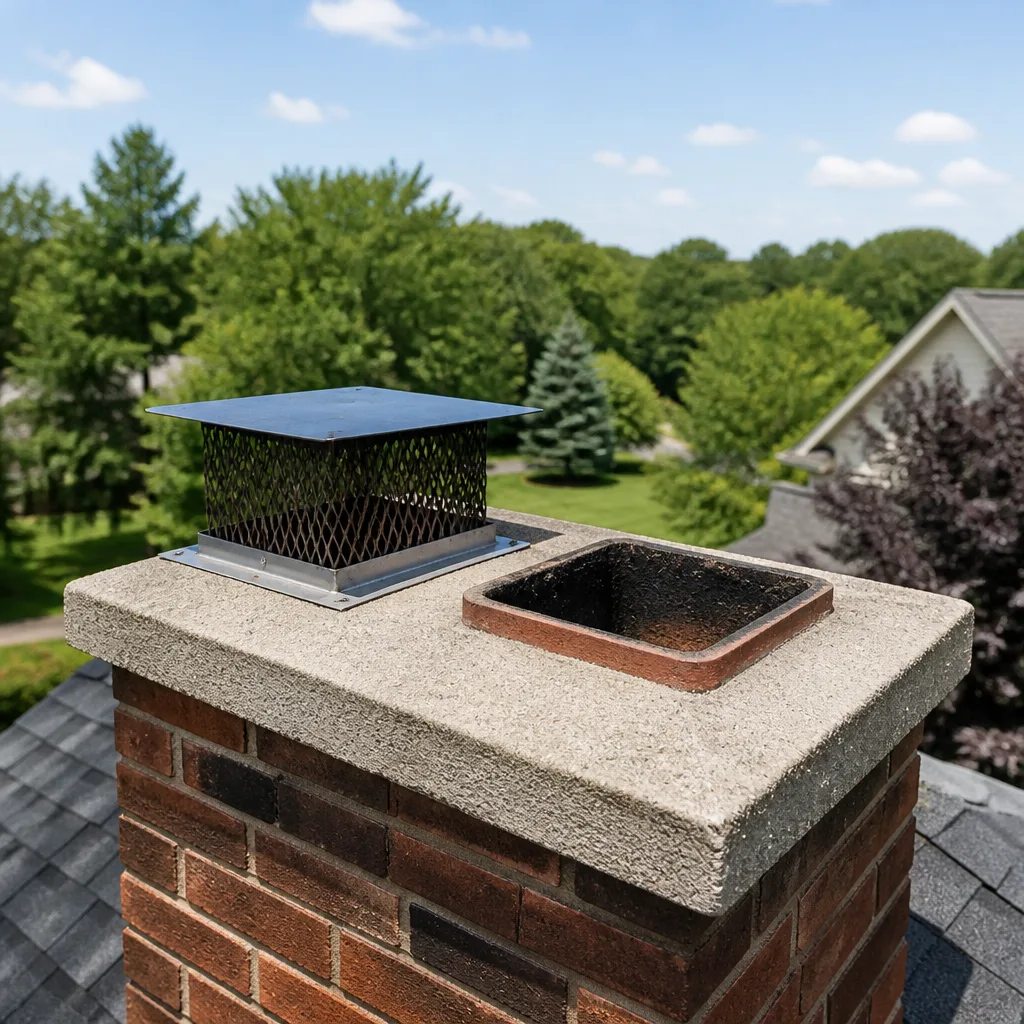 Sweep & inspection
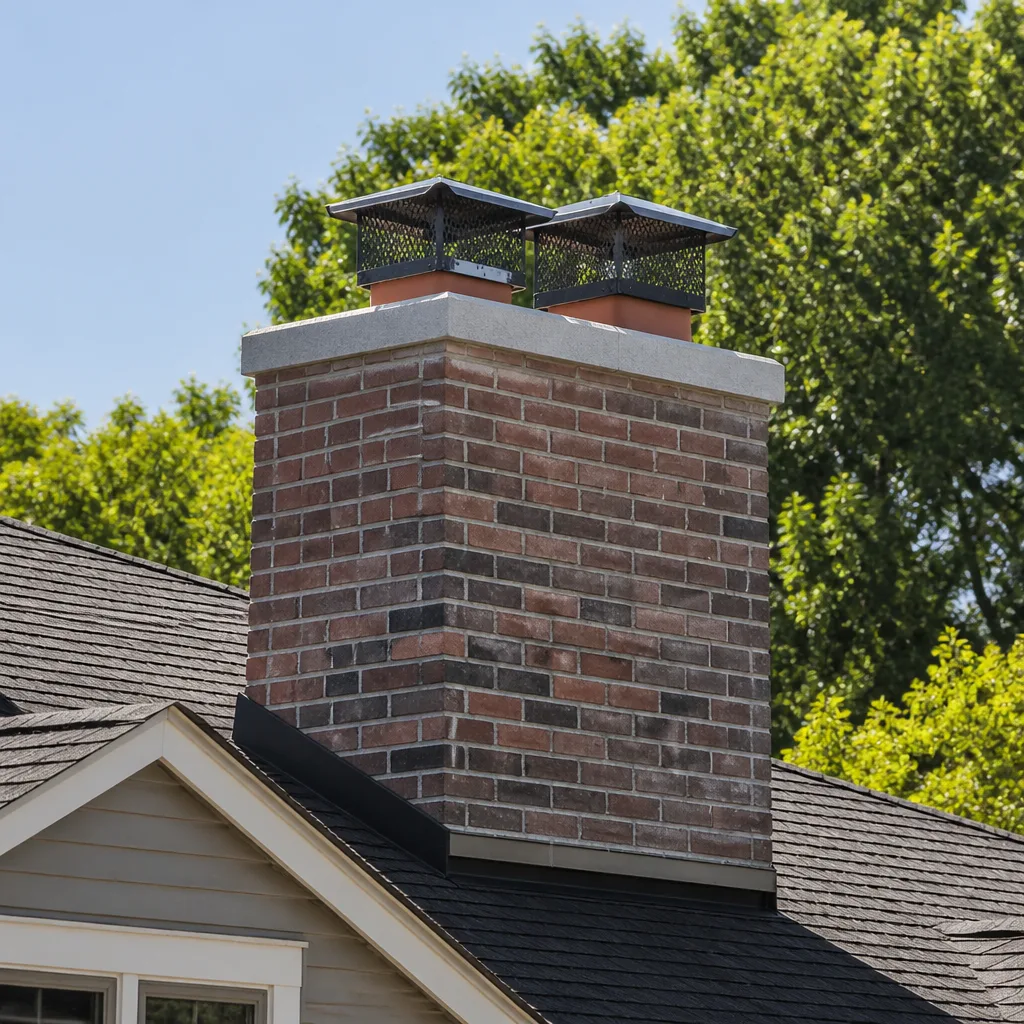 Caps & crowns
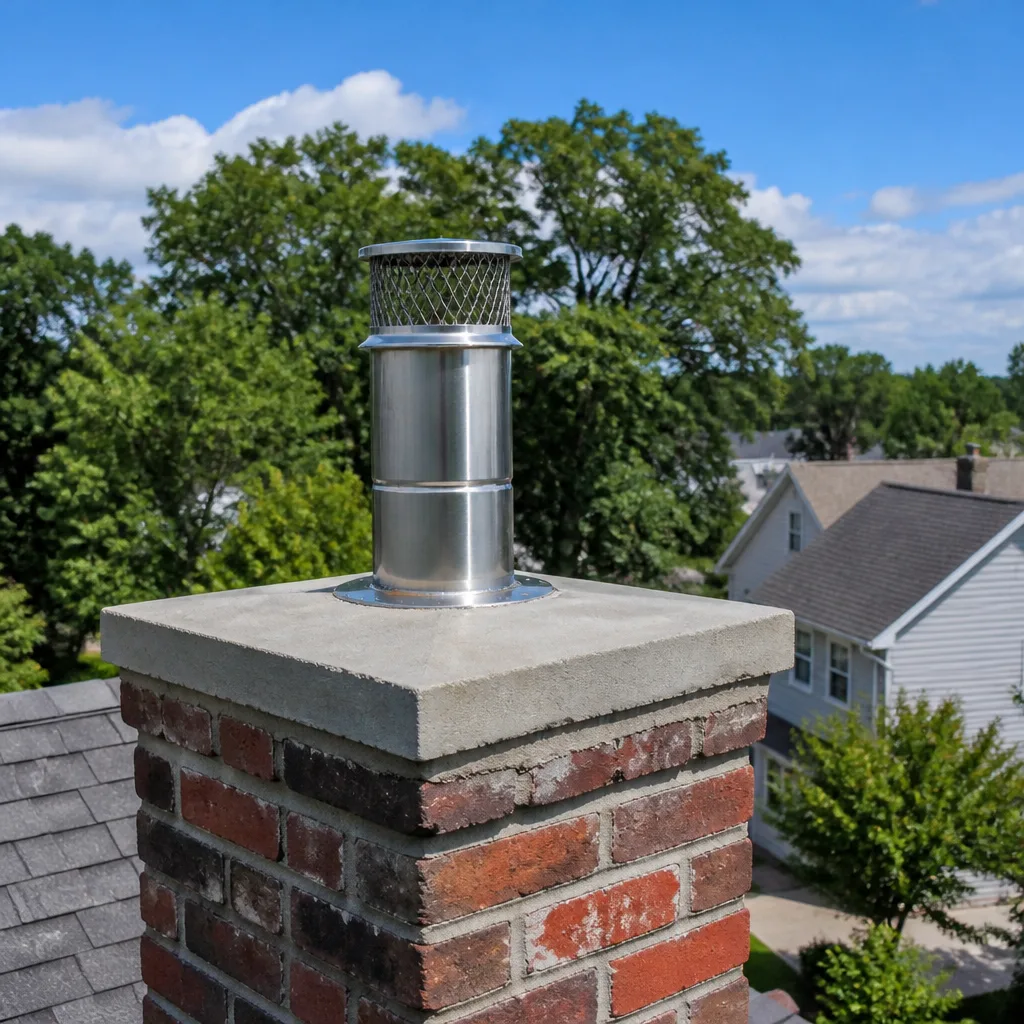 Flue relining
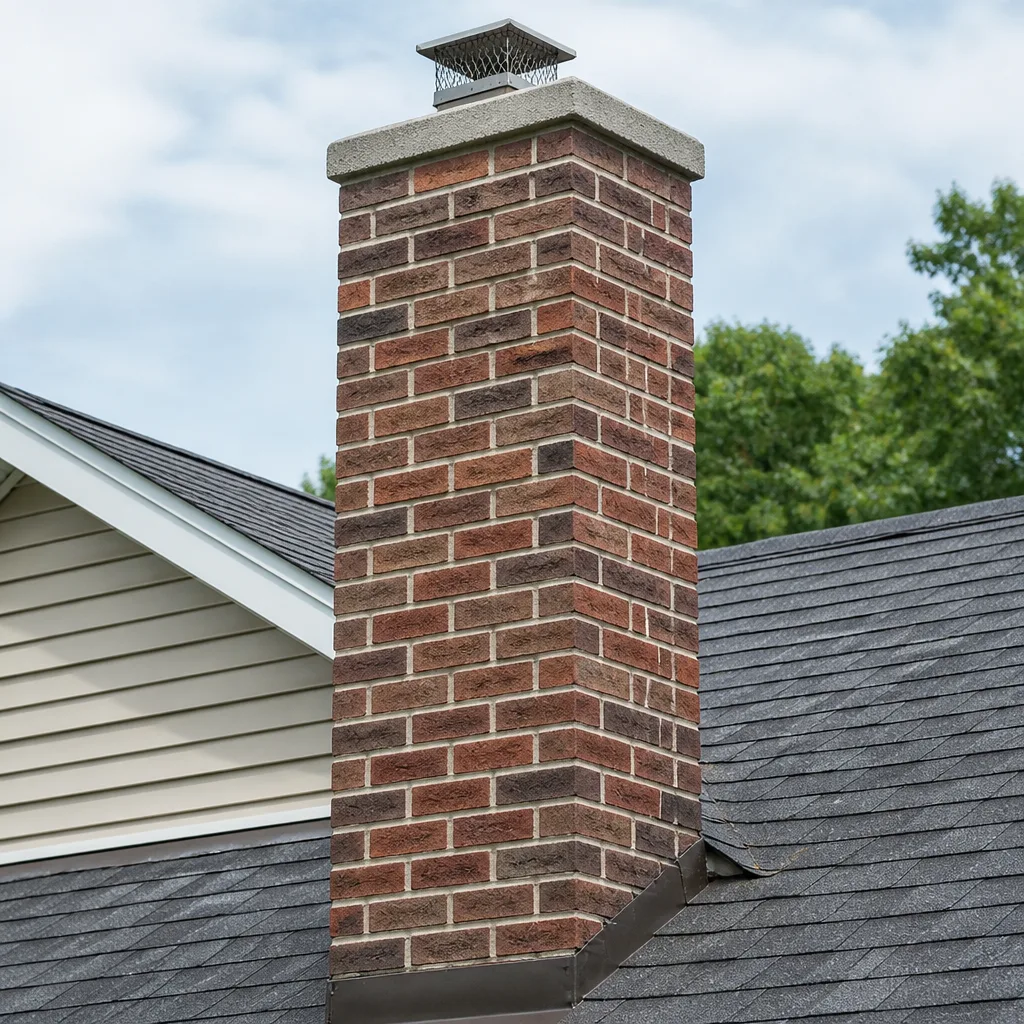 Masonry repair
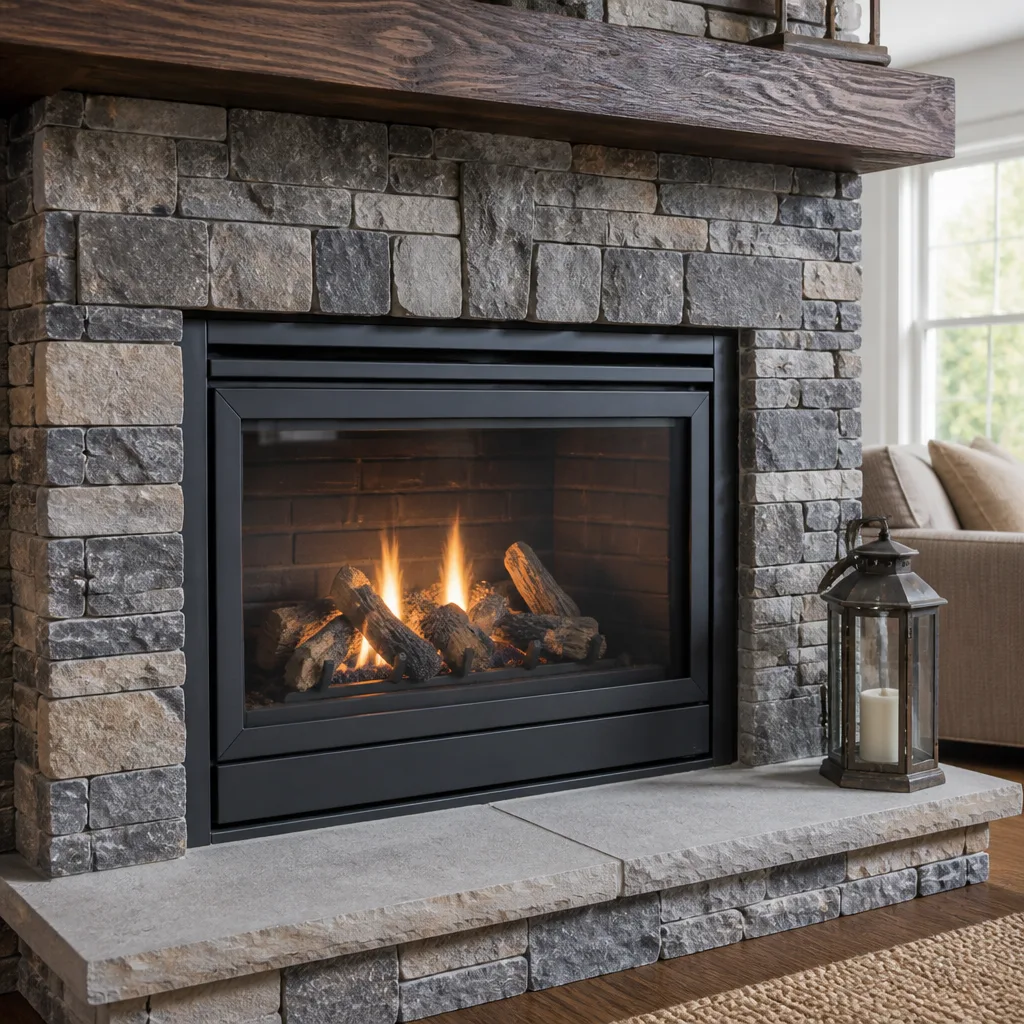 Gas fireplace service
Level 1 sweep and inspection to the NFPA 211 annual standard - flue, crown, cap, and flashing checked and photographed
Chimney sweep logs do not sweep chimneys. They loosen some creosote - which then falls where a brush and vacuum still have to collect it.
Chimney Cleaning Permits, Codes & Inspections in Parker, CO: What You Need to Know
A chimney relining done without a Douglas County permit won’t fail your fireplace. It will fail your home inspection when you sell, potentially killing a deal or repricing your closing costs. That’s the piece of this puzzle almost nobody explains to homeowners, because the work itself usually looks and performs fine. Meanwhile, routine chimney cleaning almost never needs a permit at all, and plenty of Parker homeowners waste weeks worrying about approvals they don’t need. This guide draws the line precisely: which chimney services trigger a permit in Douglas County, which count as ordinary maintenance, how Colorado’s codes interact with local rules, and what a code-compliant inspection report should contain when your insurer comes asking.
Quick Answer
Routine chimney cleaning in Parker, CO is maintenance work and does not require a Douglas County permit. Chimney repairs that change the structure or the flue system – relining, crown replacement, masonry rebuilding, or installing a new appliance and venting – typically do require a permit through Douglas County’s building department, and the work should be inspected before it’s closed up. Documentation is the part homeowners overlook: keep a written inspection report, because your insurer and any future buyer will ask for it.
Styles & brands we work with
- Sweep & inspection
- Caps & crowns
- Flue relining
- Masonry repair
- Gas fireplace service
Table of Contents
- Which Chimney Services Need a Douglas County Permit (And Which Don’t)
- How NFPA 211, IRC Chapter 10 and Douglas County Rules Fit Together
- What a Code-Compliant Inspection Report Actually Contains
- The Douglas County Permit Process: Timeline and What to Expect
- How Unpermitted Chimney Work Surfaces at Resale
- Why Parker’s Climate and Altitude Matter for Your Chimney
- What Happens If You Skip the Inspection
- Records Every Parker Homeowner Should Keep
Which Chimney Services Need a Douglas County Permit (And Which Don’t)
Permitting confusion starts with vocabulary. Homeowners hear “chimney work” and assume every visit from a chimney professional involves paperwork. It doesn’t. The distinction is between maintenance, which keeps an existing compliant system running, and alteration, which changes the system itself.
Here’s the practical breakdown for Parker homes:
- No permit typically required: chimney sweeping, Level 1 and Level 2 inspections, cap replacement where the flue and structure stay the same, damper adjustment, minor firebox tuckpointing, and routine fireplace cleaning.
- Permit typically required: full chimney relining or liner replacement, crown rebuild or replacement, masonry chimney reconstruction, chase cover fabrication and installation, adding or relocating a wood stove or fireplace insert with new venting, and any change to the flue’s height, diameter, or termination point.
There’s a grey zone worth naming. Relining with a product like DuraFlex or resurfacing a damaged flue with HeatShield sits right at the boundary. A cast-in-place resurfacing that restores the existing tile without changing the flue’s dimensions is often treated as repair; a full liner system installation usually reads as a structural alteration and gets permitted. The honest answer is that it depends on the scope the contractor writes on the application. A contractor who tells you “we never pull permits for liners” is telling you something about how they work.
We’ve seen this firsthand across Parker, from the older homes near Mainstreet to newer builds out toward Canterberry Crossing. The question we always ask before recommending work is whether it changes the flue system or just maintains it. That single test settles the permit question in most cases.
If you’re already working with us, you’ve likely noticed we inspect before we repair, and that sequencing is what makes the permit call clear. The inspection tells us what’s actually there; the repair scope tells us whether a permit applies.
How NFPA 211, IRC Chapter 10 and Douglas County Rules Fit Together
Colorado does not write its own chimney code from scratch. It adopts national model codes, and Douglas County layers local amendments and enforcement on top. Three layers matter to a Parker homeowner:
- NFPA 211 is the national standard for chimneys, fireplaces, vents, and solid fuel appliances. It sets inspection levels and defines what a compliant chimney looks like. Your inspector should be working to NFPA 211 inspection-level definitions – Level 1 for annual checks, Level 2 when the system changes or a property is sold, Level 3 for concealed areas.
- IRC Chapter 10 (the International Residential Code’s chimney and fireplace chapter) covers construction, clearances, and venting. When a contractor installs a new liner, changes a flue termination, or adds an appliance, the installation should meet IRC Chapter 10 requirements.
- Douglas County amendments and enforcement are where the rubber meets the road. The county’s building department governs which scopes require a permit, what plans need to be submitted, and what inspections are performed before work is considered complete.
Where does this differ from state defaults? Colorado’s adoption process means the model codes are the baseline, but local jurisdictions like Douglas County can tighten enforcement, speed expectations, and documentation requirements. In practice, that means two homes twenty minutes apart could face different permit scrutiny if they sit in different counties. Parker’s stakeholders – buyers, sellers, insurers – tend to expect Douglas County-level documentation, which is stricter than a homeowner moving in from a more permissive county might assume.
The mistake we see most often is a contractor quoting a job based on IRC Chapter 10 alone without checking the local layer. Codes stack, and the local one usually wins on questions of “does this need a permit and an inspection.”
What a Code-Compliant Inspection Report Actually Contains
A code-compliant inspection report is a written document, not a verbal walkthrough. It should stand on its own years later, when you can’t remember which technician visited or what they said. Here’s what a defensible report includes:
- Inspection level (1, 2, or 3) per NFPA 211, with the reason the level was chosen.
- Appliance details – type, fuel, and whether venting configuration matches the appliance.
- Flue condition – visible condition of the liner or tile, with specific descriptions rather than “needs attention.”
- Clearances – documented clearances to combustibles where accessible.
- Photographic evidence – photos or camera captures of what the inspector actually saw, not just items on a checklist.
- Findings separated from recommendations – what’s unsafe now versus what should be addressed before the next season.
- Sign-off by the inspecting company, with date and scope clear enough for an insurer or a real estate professional to read.
Why does this matter for insurance? After a chimney fire, your insurer will want documentation of the condition before the loss. A Level 2 inspection report from before the event, with photos and findings, is far easier to work with than a claim adjuster’s guess at what the flue looked like. Insurers are increasingly asking for evidence of maintenance, and a written inspection report is exactly that. Verbal “we looked at it last spring” recollections don’t age well.
Our chimney inspection is offered as a standalone service for exactly this reason. The report has value on its own, independent of any repair. If you’re planning to sell, buying a home in Parker, or filing a claim, that document is the thing that holds up.
The Douglas County Permit Process: Timeline and What to Expect
If a permit is required, here’s the general arc a competent contractor should be building into the project timeline:
- Scope and documentation. The contractor prepares a written scope with drawings or specifications, especially for liner and structural work. Vague scopes get permits rejected or cause inspection failures later.
- Application submission. The permit application goes to Douglas County’s building department, with the project details and contractor information.
- Plan review. For straightforward work, review is typically a matter of days. For structural changes or complex installations, expect longer.
- Permit issuance and scheduling. Once the permit is issued, work can be scheduled. The contractor should be upfront that the permit is in the timeline, not an afterthought.
- Inspection and sign-off. Many projects require one or more inspections at specified stages – before concealment for some systems, final inspection when the work is complete.
- Closed permit. The project is only truly finished when the permit is closed with the county. An open permit shows up on records and can block a home sale.
Costs are administrative: permit fees vary based on the scope and valuation of the project, and the county’s building department sets them. We don’t quote permit fees as a line item we control. What we do is include the permit in the schedule from the start, so the homeowner isn’t discovering three weeks into a relining project that a permit was never filed.
Two things to check yourself: that the permit is issued in the homeowner’s name or properly records the work on the property, and that the final inspection sign-off is in the records. If a contractor does this work for you, those two records are the proof a future buyer or insurer will look for.
How Unpermitted Chimney Work Surfaces at Resale
Unpermitted chimney work is invisible until someone looks. At resale, someone looks. Here’s the sequence where it typically comes up:
- Disclosure questions. Colorado’s seller property disclosure form asks about known work, permits, and unpermitted additions. Answer honestly; the paper trail catches inconsistencies faster than you’d expect.
- Inspection. A home inspector sees the chimney, notes recent-looking work, and flags it for a specialist. A Level 2 inspection on an unpermitted reline will surface visible issues, and the lack of a permit record will surface too.
- Title and records check. Pulling the county record on the property shows whether permits were issued for work. Absence of a permit for work that clearly happened is a red flag in due diligence.
Remediation ranges from “drop in the paperwork” to “have the work redone.” If an unpermitted reline was installed correctly, the remediation is often retroactive: a licensed contractor reviews the work, a reinspection happens where the county allows it, and fees are paid. If the work wasn’t done right – wrong liner sizing, wrong termination, missing clearances – the only path is removing and redoing it. That’s where a modest reline project becomes a two-project problem.
The honest assessment: in Parker’s market, buyers are pushing back on unpermitted work harder than they used to. A closing that stalls over a chimney issue is a real possibility, and the homeowner who can produce a permit and an inspection report from a chimney repair has a materially easier transaction. We’ve seen it cut both ways.
Why Parker’s Climate and Altitude Matter for Your Chimney
Parker sits in the Colorado Front Range at elevation, and that shapes what happens to chimneys here in ways that matter for both maintenance and code compliance. Three local realities:
Freeze-thaw cycles. The swing between warm daytime and freezing nights through much of the year stresses masonry. Cracks open, spall, and re-open. Most chimney water damage we encounter on Parker homes traces back to a failing crown or a missing or poorly fitted cap, which is why our chimney cap and crown work exists as a dedicated service. A purpose-engineered cap from a line like Gelco or Famco seals the flue against water; hardware-store substitutes seal less reliably and fail sooner.
Altitude. At Parker’s elevation, wood burns slightly differently and draft behaves differently than at lower altitudes, and appliance venting should be sized and installed with that in mind. This is one place where “it worked in Denver” thinking doesn’t automatically transfer to the surrounding Front Range communities.
Burning season concentration. Most Parker homeowners burn intensively for a shorter window, which means creosote builds in a compressed timeframe. A chimney that coasts through a long mild season without maintenance can accumulate real creosote over a Parker winter. That’s why we recommend booking a chimney sweep before burning season, not after. Booking ahead means a scheduled visit, not a scramble.
None of this is exotic. It’s just what our technicians have learned across up to 8 years of experience working chimneys in this climate. If a contractor from a different climate has strong opinions about “annual maintenance is optional,” you’re talking to the wrong contractor for a Parker home.
What Happens If You Skip the Inspection
Skipping an inspection doesn’t cause an immediate problem. That’s exactly why it’s easy to skip – and why the eventual problem is more expensive than it would have been. Here’s the realistic sequence:
- Creosote accumulates in the flue without a sweep and camera check catching the rate of buildup.
- A flue tile crack or liner gap goes undetected; the smoke and gases go where they’re not supposed to.
- A chimney fire starts. A creosote-fed chimney fire burns hot enough to damage the flue, and occasionally to reach combustibles in the structure.
- Carbon monoxide becomes a real concern if the flue is compromised, because the appliance’s byproducts no longer have a clear path out.
None of this is meant as scare-selling. Most Parker chimneys that get inspected annually are fine – that’s the point of the inspection, to confirm the system is working. The problem is the minority of cases where the inspection would have caught something early, and the difference between “we found a crack, let’s address it” and “the flue is compromised and we have a much bigger project” is usually the cost of a sweep and an inspection.
One more thing nobody says out loud: an inspection that tells you nothing needs doing is worth as much as one that finds a problem. Finding out your system is in good shape before you light the first fire is worth more than finding out in January. Our Parker Chimney Sweep team does both kinds of visits routinely, and we’ll tell you plainly when you can safely wait until next season.
Records Every Parker Homeowner Should Keep
Here’s the short list of documents that hold up over time:
- Inspection reports from each visit, with the level of inspection stated.
- Sweep records – date and what was removed.
- Repair invoices with materials named (a DuraFlex or Olympia Chimney liner specification is far more useful than “liner installed”).
- Permit and inspection sign-off from Douglas County, if the work was permitted.
- Warranty paperwork for any liner or cap product, if the manufacturer provides one.
- Photos before and after any repair work.
Keep these together in a folder, physical or digital. When a home inspector, an insurer, or a buyer asks about the chimney, you’re handing over a file rather than a story. That’s a much better position to be in.
Common Mistakes to Avoid
- Assuming a permit is required for sweeping. Chimney cleaning is maintenance and does not require a permit. Wasting time or money pursuing one for a routine sweep is a common error with newer Parker homeowners.
- Assuming a permit isn’t required for relining. The opposite mistake, and the more serious one. A liner installation that changes the flue system should be permitted, and skipping it creates a resale problem.
- Accepting a verbal inspection. “Looks good to me” is not documentation. Request a written report with photos, because your insurer will not accept the recollection.
- Choosing the cheapest contractor quote. Price differences in chimney work often come down to materials and whether a permit is included. A quote without the permit in it isn’t really comparable.
- Letting a contractor self-certify. When work triggers a permit, county inspection is the point. A contractor who tells you a sign-off isn’t needed is telling you something.
- Ignoring the flue when you replace the appliance. Changing a fireplace insert or adding a wood stove changes venting requirements, and any competent fireplace repair scope will address the flue as part of the appliance change.
- Waiting until a problem shows itself. Most chimney problems announce themselves through smoke, smell, or draft. Getting ahead of that with a pre-season appointment is cheaper than reactive repair.
See the difference
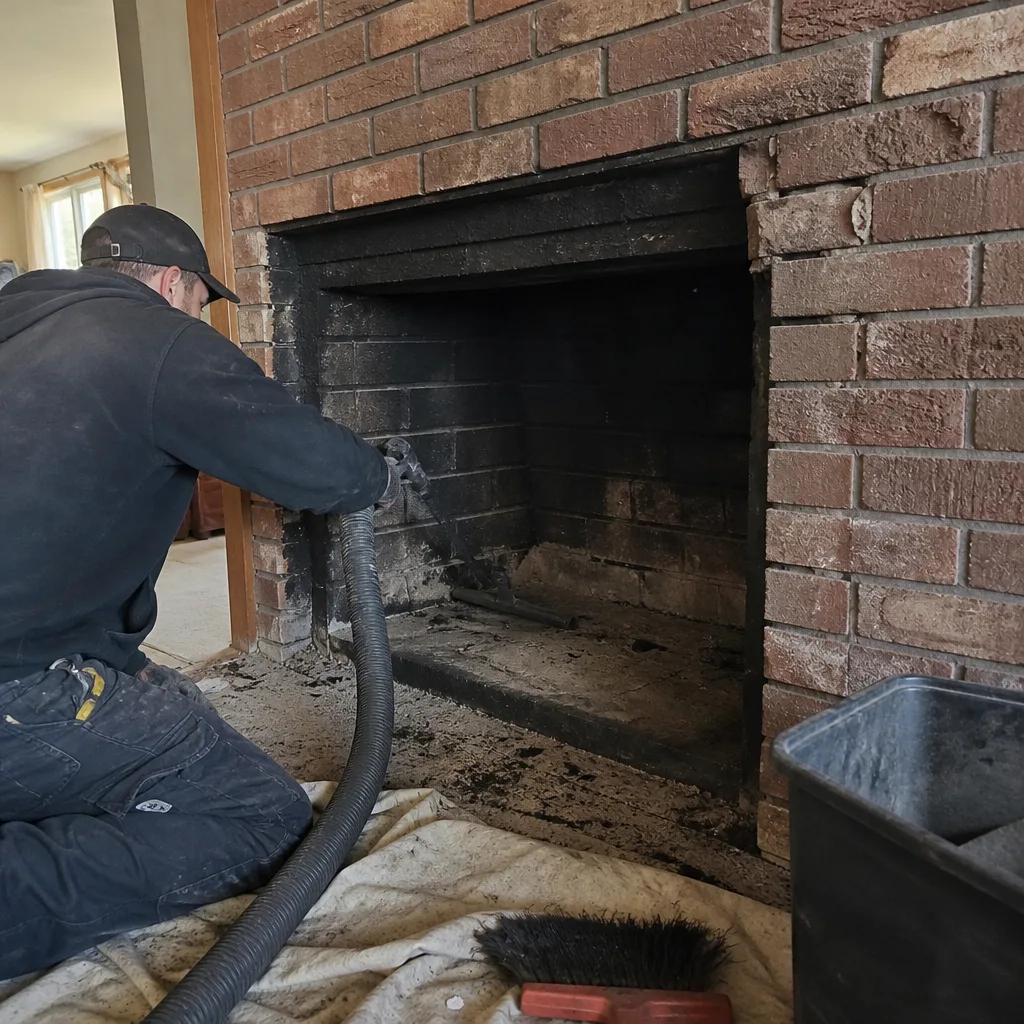 Before
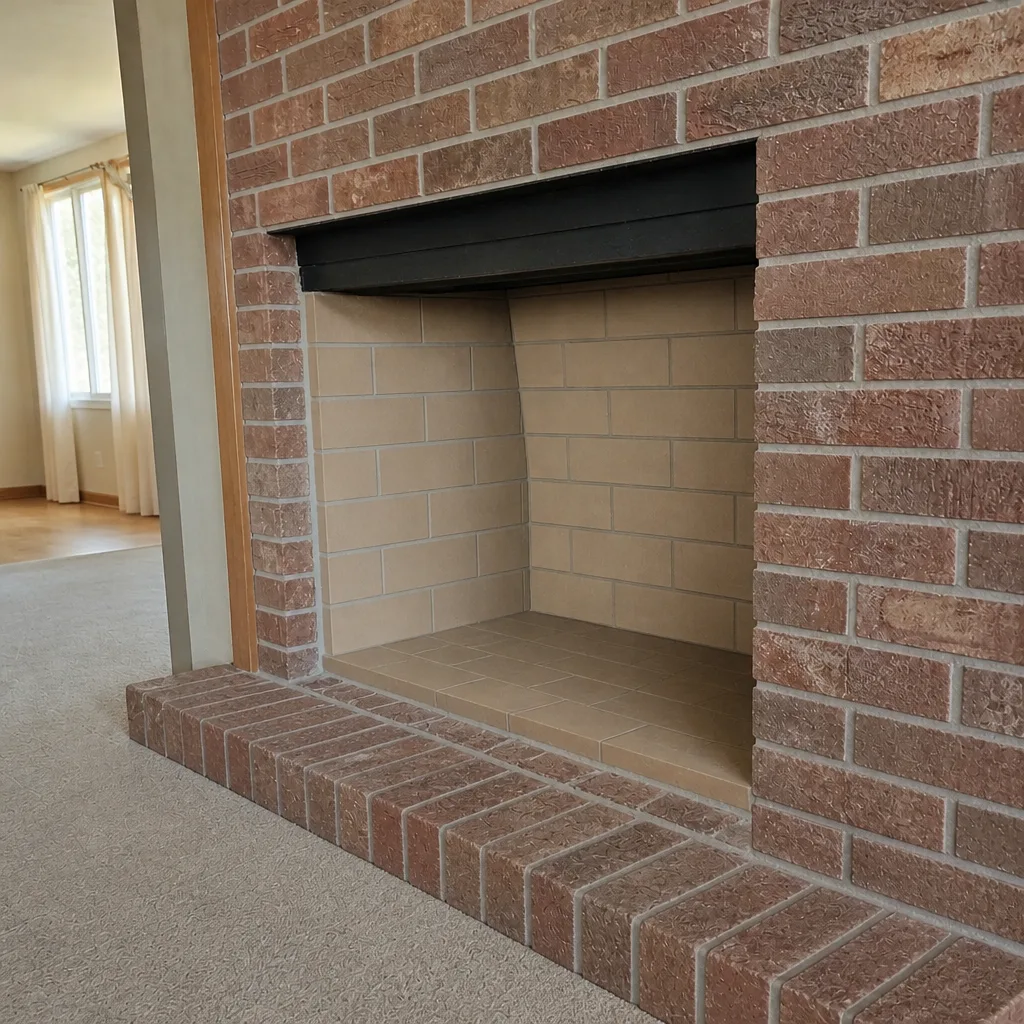 After
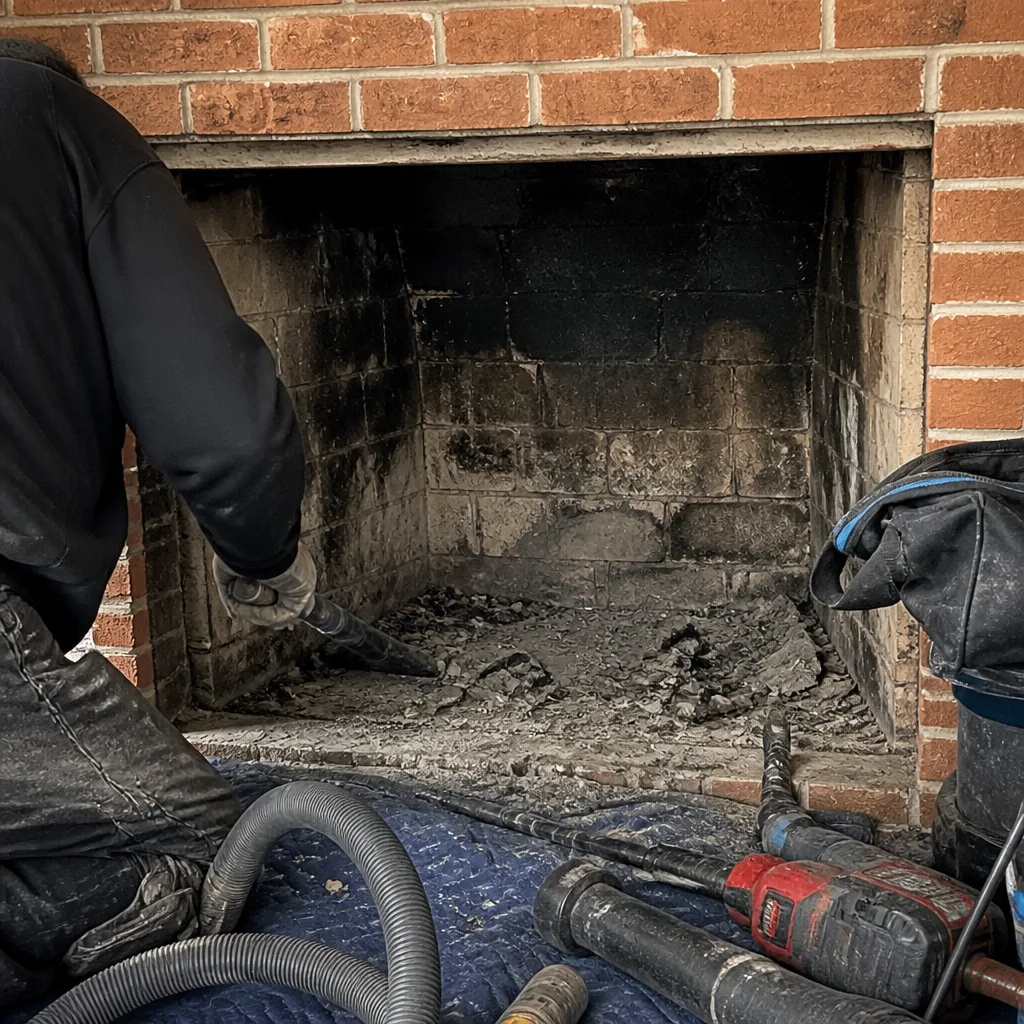 Before
 After
 Before
 After
When to Call a Professional
Some things you can safely check yourself: a cap that’s visibly missing, soot on the firebox, or a damper that sticks. Some things you should not touch. Creosote accumulation, glazed flue tile, liner gaps, any crack you can see with a flashlight, or a chimney that smells strongly after rain – these are inspection calls, not homeowner diagnoses. High-tension hardware, suspended chimney components, and anything involving firebox or flue integrity involve real risk if handled wrong. Call a trained technician.
Parker Chimney Sweep offers free estimates in Parker – call (844) 443-4897. We answer 24/7. Fast dispatch from 7am to 7pm, Sunday through Friday. Our technicians have up to 8 years of experience, and every recommendation we make comes after an inspection, not before.
Frequently Asked Questions
No. Routine chimney cleaning in Parker, CO is maintenance work and does not require a Douglas County permit. Permits enter the picture only when the work changes the chimney system itself – relining, crown rebuild, masonry reconstruction, or installing a new appliance with new venting. Call (844) 443-4897 for an exact quote – estimates are free.
Typically yes. A full liner installation or a change to the flue’s dimensions, height, or termination usually requires a permit through Douglas County’s building department, with county inspection before the project is closed. Some resurfacing work (like a HeatShield application that restores existing tile without changing flue dimensions) may be treated as repair, but the honest answer depends on the specific scope. Call (844) 443-4897 and we’ll walk you through what applies to your situation – estimates are free.
Cleaning removes creosote, soot, and debris from the flue. Inspection evaluates the condition of the system and documents it in a written report per NFPA 211 levels. They’re separate services, and both belong in a healthy maintenance routine. An inspection is what tells you whether the system is safe to use after cleaning; cleaning without inspection is only half the visit.
A Level 2 inspection is a documented evaluation of the accessible portions of the chimney and venting, typically required when a property changes hands, an appliance changes, or after a chimney fire or other event. It includes photos, findings, and recommendations in a written report. It’s the documentation that insurers and real estate professionals ask for. Call (844) 443-4897 for an exact quote – estimates are free.
Yes, potentially. Unpermitted chimney work can surface during the buyer’s inspection, the title and records check, or the seller’s disclosure process. Remediation ranges from filing retroactive paperwork to removing and redoing the work if it wasn’t done correctly. In Parker’s market, buyers are scrutinizing this more closely than they used to. Call (844) 443-4897 for an exact quote on bringing your chimney records up to date – estimates are free.
NFPA 211 calls for an annual Level 1 inspection of chimneys that are in regular use, with a Level 2 inspection whenever the system changes or a property changes hands. For Parker homes that burn intensively through the winter, annual is a reasonable baseline. Call (844) 443-4897 for an exact quote – estimates are free.
The Bottom Line
The permit question for chimney work isn’t complicated once you see the line: maintenance doesn’t need one, and alterations usually do. Sweeping, inspections, and routine cap replacement fall on the maintenance side. Relining, crown rebuilds, masonry reconstruction, and appliance changes fall on the alteration side. NFPA 211 is your inspection standard; IRC Chapter 10 governs construction; Douglas County enforces both with local rules and paperwork. The document trail – inspection reports, permit sign-offs, repair invoices – is what protects you at resale, at the insurance claim, and in the hands of a future buyer. Get the inspection done, keep the paperwork, and call us before you need to.
Parker Chimney Sweep is your one company, start to finish, from firebox to crown. Whether it’s a chimney sweep, a permitted relining, or a chimney repair that follows a documented inspection, we bring professional-grade materials and a written estimate before anything is scheduled. Call (844) 443-4897 for a free estimate. We answer 24/7. Fast dispatch from 7am to 7pm, Sunday through Friday.
Written by the team at Parker Chimney Sweep.