
Last updated November 23, 2026
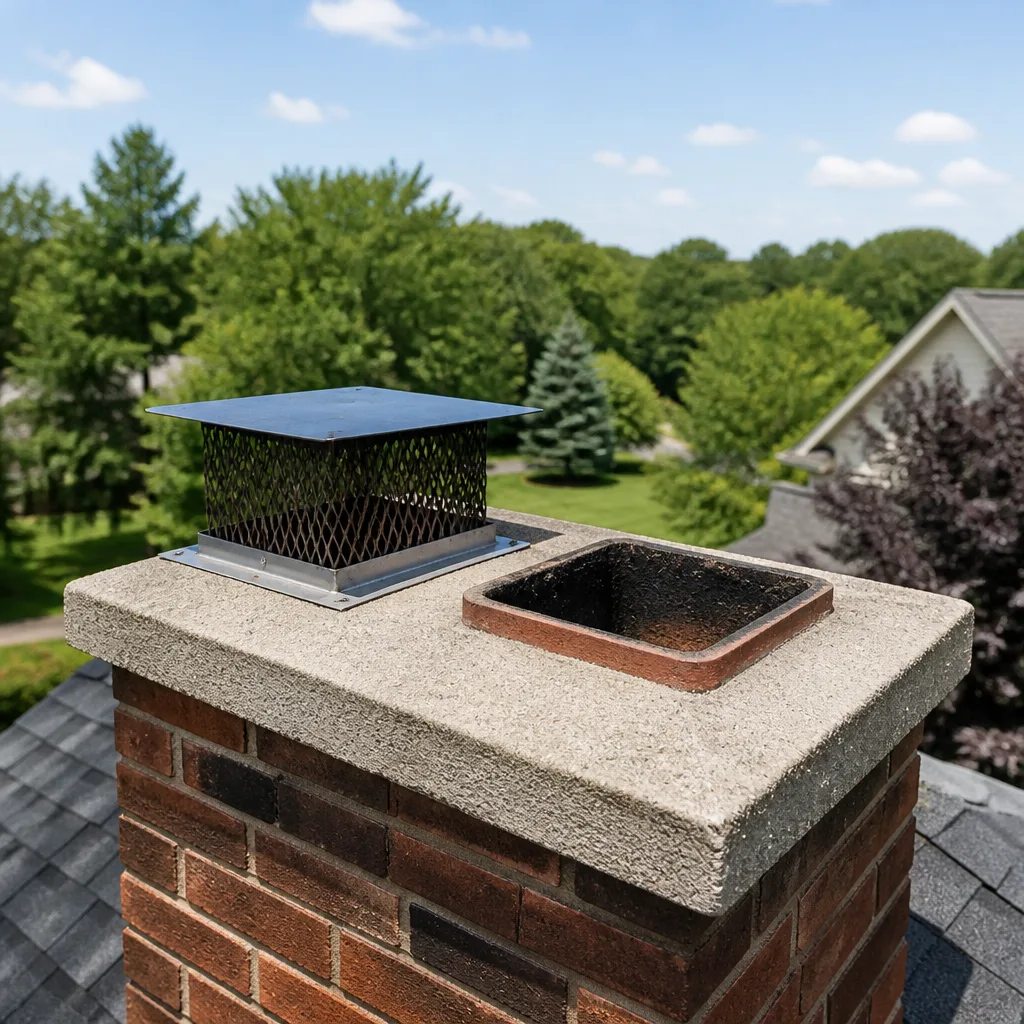 Sweep & inspection
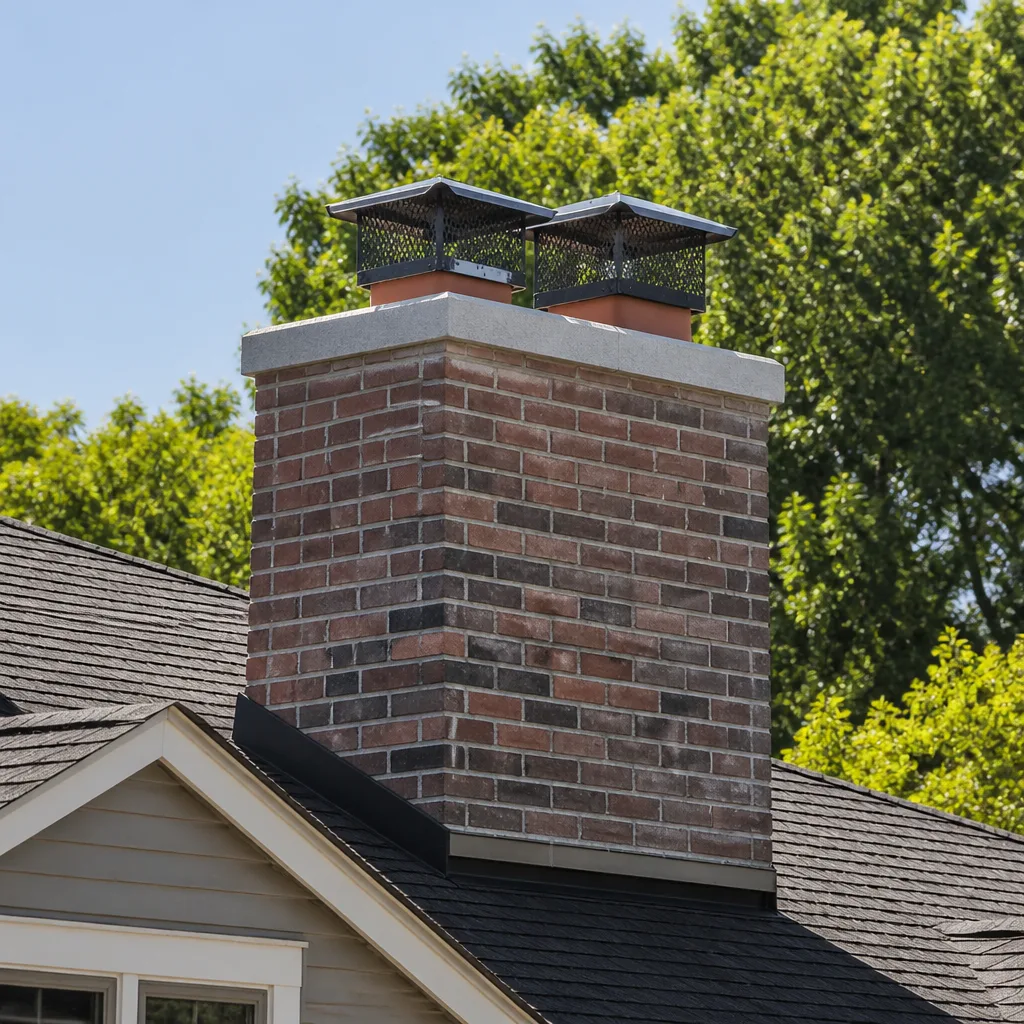 Caps & crowns
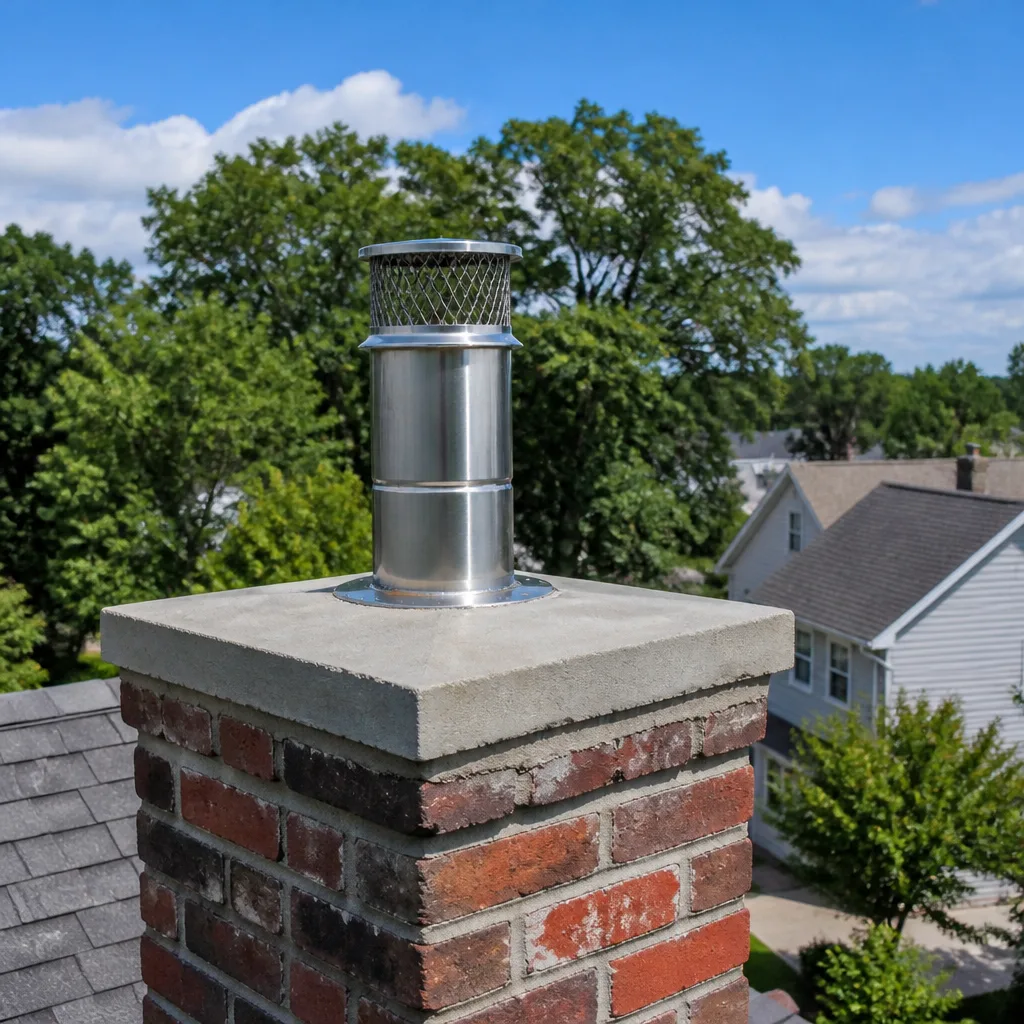 Flue relining
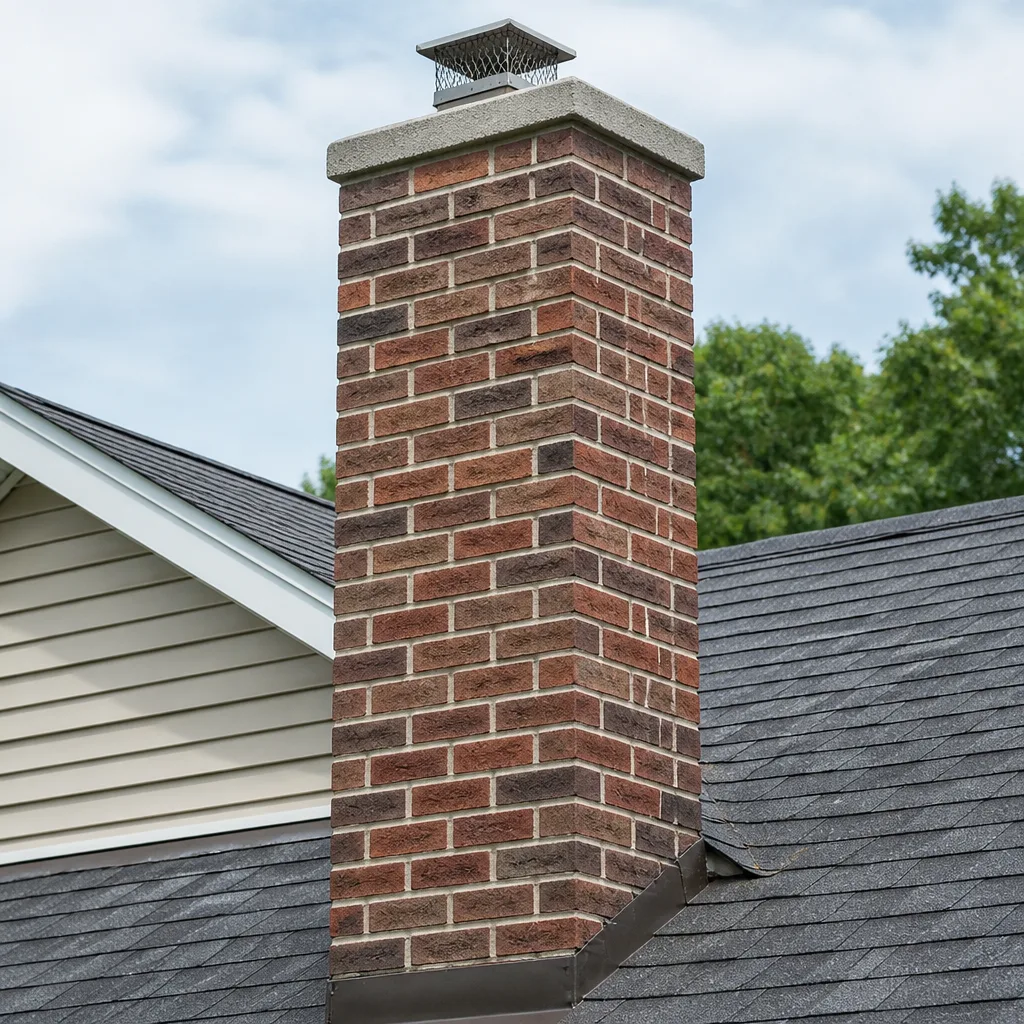 Masonry repair
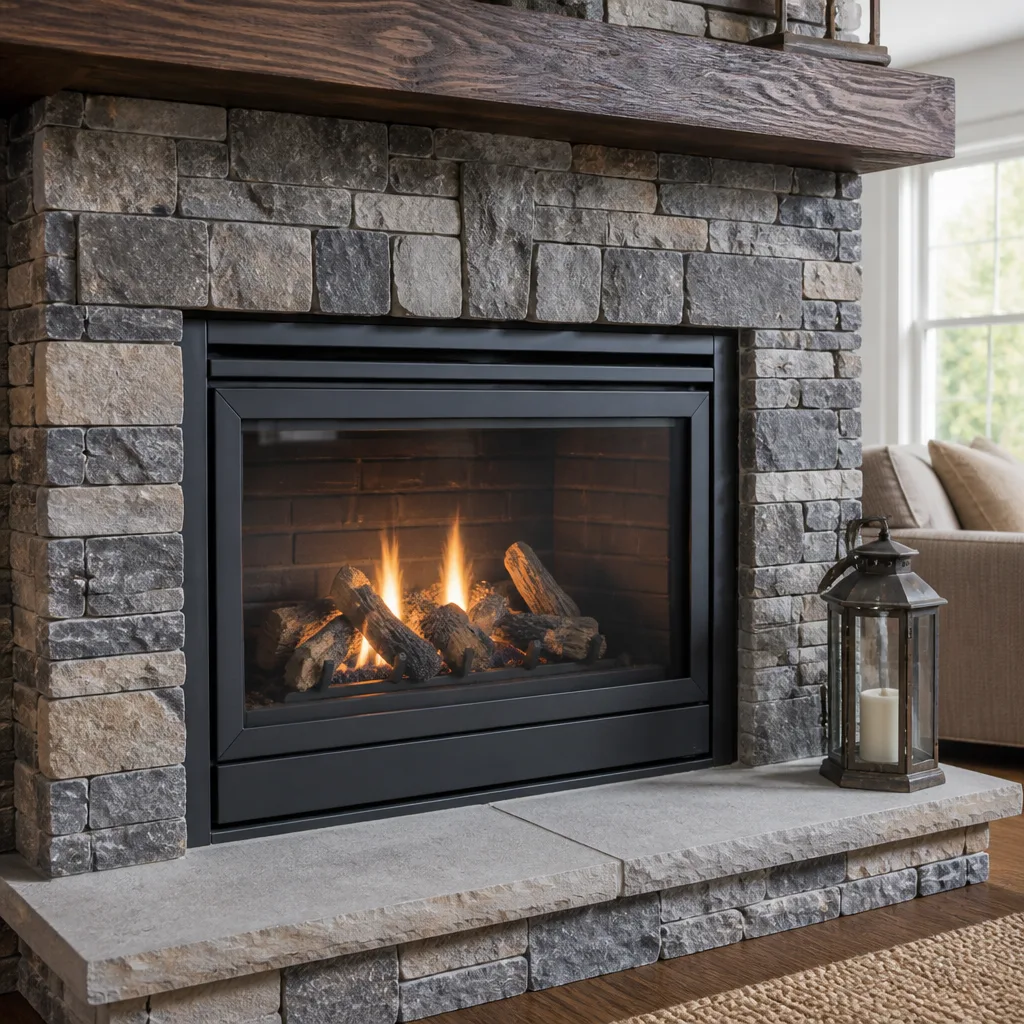 Gas fireplace service
Level 1 sweep and inspection to the NFPA 211 annual standard - flue, crown, cap, and flashing checked and photographed
Chimney sweep logs do not sweep chimneys. They loosen some creosote - which then falls where a brush and vacuum still have to collect it.
How to Hire a Chimney Cleaning Contractor in Parker: A Step-by-Step Guide
Most homeowners assume a certification badge means a contractor has spent years apprenticing in the field. That isn’t always true. Some credentials rest on a written exam alone, with no supervised chimney work required before the badge goes on the website. Knowing how to read credentials, insurance, and contracts changes everything about how you hire a chimney professional. This guide gives you a working framework: what the certifications actually mean, the four questions that separate a chimney specialist from a handyman, how to spot an upsell in a written estimate, and the red flags local to the Parker market. You’ll learn to vet a contractor the way an inspector would.
Quick Answer
To hire a chimney cleaning contractor in Parker, verify credentials, insurance, and scope before anyone touches your flue. Ask whether they carry CSIA or NFI certification, confirm their liability coverage includes fire-related claims, and request a written estimate that itemizes the sweep and the inspection separately. The right contractor inspects before recommending repairs, works on the full chimney system, and gives you a written scope with pricing before the first brush goes up the flue.
Styles & brands we work with
- Sweep & inspection
- Caps & crowns
- Flue relining
- Masonry repair
- Gas fireplace service
Table of Contents
- What Do Chimney Certifications Actually Mean?
- Four Questions That Separate a Specialist from a Generalist
- What a Legitimate Written Estimate Should Itemize
- How to Verify Insurance Is Specific to Chimney Work
- Why Inspection Comes Before Any Repair Recommendation
- Why Full-System Capability Matters in Parker Housing
- Red Flags Unique to the Parker Market
- Step-by-Step: The Hiring Process From Call to Sign-Off
What Do Chimney Certifications Actually Mean?
Chimney certifications are not created equal. The three letters you’ll see most often are CSIA, NFI, and a general contractor’s license, and each one tells you something different about the person coming to your door. Reading them correctly is the first step in hiring well in Parker.
CSIA certification comes from the Chimney Safety Institute of America. It’s administered as a written exam. That matters because a written exam proves familiarity with codes, venting theory, and safety standards, but it does not, on its own, require supervised field work under a certified professional. Certification and experience are two different things. A CSIA badge is a baseline, not a diploma. When you’re hiring, treat it as one input among several, and ask directly about field experience with the type of chimney you have.
NFI certification comes from the National Fireplace Institute. It’s more relevant when you’re buying or servicing a gas or wood appliance rather than just cleaning a flue. If your fireplace is a gas insert and you want service rather than a sweep, NFI credentialing is the one to ask about.
A general contractor’s license is a state matter. In Colorado, general contractors register at the state level, but that registration does not certify chimney competence. A GC can legally pour a foundation or frame a wall. None of that training addresses flue sizing, venting clearances, or masonry crown geometry. If your chimney needs a rebuild rather than a sweep, you want both: a chimney specialist who knows the venting theory and, when structural masonry is involved, a licensed mason working to that specialist’s specification.
For most Parker homeowners the answer is simple. For a cleaning and inspection, CSIA familiarity plus verifiable chimney-specific experience is what matters. For a fireplace repair or appliance service, NFI is the more useful credential. For a rebuild, ask who is doing the masonry and what their license and insurance actually cover. One badge cannot cover all three jobs, and any contractor who implies otherwise is telling you something about how they sell.
Four Questions That Separate a Specialist from a Generalist
Asking for references rarely helps. Homeowners recommend the person who was pleasant, not the person who was technically competent. Instead, ask questions that reveal whether the contractor works on chimneys or just added sweeping to a service list.
- “What’s your inspection protocol?” A chimney specialist references NFPA 211 inspection levels – the industry standard defining three levels of chimney inspection. A generalist will describe “a look up the flue” without naming a level. If the contractor can’t tell you which level of inspection they’re performing and what it covers, they are cleaning rather than inspecting.
- “Can you install the liner, or only recommend it?” Sweep-only outfits stop at the recommendation. A full-service chimney specialist carries professional-grade product lines and can install them. We work with DuraFlex and Olympia Chimney liners, Gelco and Famco caps, and HeatShield flue resurfacing. If the contractor hands you off to a second company for the install, you’ve hired half a contractor.
- “What does your estimate itemize?” A legitimate chimney estimate separates the sweep from the inspection from any repair. A single “chimney service” line item with a number that changes on site is a sign the price was never real. Ask for an itemized written estimate before the first visit.
- “Who does the masonry and who does the cap and crown?” A chimney specialist covers the full system: sweep, inspect, repair, cap and crown. A generalist subcontracts at least one of those, which means two different contractors with two different accounts of what’s wrong. One company, start to finish, is the standard you’re hiring against.
Our technicians have up to 8 years of experience, and the difference between a trained chimney technician and a generalist with a brush shows up in the answers to these four questions before anyone climbs onto the roof.
What a Legitimate Written Estimate Should Itemize
A chimney cleaning estimate in Parker should be a written document with separate line items for the sweep, the inspection, and any recommended repair, with the pricing range for each. If the number was quoted over the phone and the paperwork arrives after the work, walk away.
Here’s what a legitimate itemized estimate contains:
- The sweep itself – described as a flue cleaning with a stated method, not as “chimney service.”
- The inspection level – named explicitly (Level 1, 2, or 3 per NFPA 211) with a note on whether a camera is used and whether you receive photos or a written report.
- Any recommended repair, itemized – crown repointing, cap replacement, liner section repair, each as its own line with its own price range.
- The written estimate itself – a document you receive before work begins, with a note that the final price matches the written estimate.
Three line items signal an upsell trap. The first is a “chemical cleaning” charge applied to every sweep without evidence it’s needed; a properly run sweep uses mechanical brushes, and chemical treatment is sometimes justified but never universal. The second is a “cap upgrade” recommended on every visit including brand new caps. The third is a “sealant package” priced separately from the actual repair so it can be layered on after you’ve agreed to a scope. None of these are automatically wrong. But if they show up pre-printed on every estimate, you’re being sold a template, not an assessment.
The final price on a legitimate estimate should be the price on the invoice, with the written estimate setting the number. When you’re ready to schedule, chimney sweep pricing is set per job by the written estimate, and the estimate is free. Call (844) 443-4897 to book yours. We answer 24/7. Fast dispatch from 7am to 7pm, Sunday through Friday.
How to Verify Insurance Is Specific to Chimney Work
Generic liability insurance is not enough. Standard general liability policies sometimes exclude or limit coverage for fire-related claims, and a chimney fire caused by a missed creosote load can quickly become the kind of claim that gets denied. Ask the contractor two questions about insurance, in writing.
- “Can you send me a current certificate of insurance naming your general liability carrier and limits?” Any legitimate chimney contractor can do this before the visit. The certificate should list your contractor as the named insured.
- “Does your policy cover fire damage caused by the work, and is your crew covered by workers’ compensation?” If a technician falls off your roof and isn’t covered by workers’ comp, the claim can come to your homeowner’s policy. Ask whether the crew on your roof is an employee or a subcontractor, and how each is insured.
Get the answers in writing. A verbal “we’re fully insured” over the phone is worth nothing when the claim lands. A contractor who can’t produce a certificate before the visit is telling you something you should believe. If your own homeowner’s insurance covers chimney work only when performed by a licensed and insured professional, ask them to confirm the requirement so you can match it to the contractor’s paperwork. You don’t need policy numbers from the contractor, just a certificate and a yes on the two questions above.
Every local pro we connect you with is licensed and insured as their state requires, and the paper trail shows up before the first visit.
Why Inspection Comes Before Any Repair Recommendation
No honest chimney professional recommends liner or masonry work before an inspection. This is the single most diagnostic point in the whole hiring process. If a contractor tells you on the phone that you “probably need a new liner,” they are either guessing or selling.
Here’s how inspect-before-repair actually works when it’s done properly:
- Level 1 inspection happens with a standard sweep, checks readily accessible portions of the chimney, and is the most common. It’s appropriate when conditions haven’t changed since the last inspection.
- Level 2 inspection adds a video scan of the flue interior, and it is the standard after a chimney fire, after a change in fuel type, or after a significant weather event. You should receive a written report and be able to see the footage or photos.
- Level 3 inspection is diagnostic and may open parts of the chimney structure. It’s only recommended when a Level 1 or 2 inspection has identified a specific problem.
A contractor doing this properly shows you what they saw. You should be able to look at the same photo or video and reach the same conclusion. If your flue tiles have isolated surface spalling but the substrate is sound, HeatShield flue resurfacing can restore the interior without a full reline. If the tiles are cracked through to the masonry, resurfacing isn’t the right fix and a liner replacement is. Those are two very different scopes and two very different prices. The evidence is what separates them, and you have a right to see it.
When a repair can safely wait, an honest contractor tells you. Creosote glaze that needs brushing before the next burning season can be scheduled. A hairline crack in the crown can be sealed on a normal timeline. If your inspection turns up a problem, our chimney repair team begins with the inspection records, not with a recommendation. We won’t skip the camera to hurry the estimate.
Why Full-System Capability Matters in Parker Housing
Parker sits on the eastern edge of the Front Range foothills, and the winter air here gets cold enough that a wood-burning fireplace earns its place in the home. It also gets dry enough that the masonry on the chimney crown takes a beating from thermal cycling, freeze-thaw, and the summer storms that roll off the foothills. Creosote accumulation and moisture intrusion are the two problems Parker homeowners deal with most, and they arrive at the same time because each makes the other worse.
This is why full-system capability matters for hiring. Consider what a typical Parker chimney needs across a season:
- Sweeping to clear creosote before it becomes a fire hazard.
- Inspection to check the flue, firebox, damper, and masonry.
- Crown repair or replacement when water intrusion has started to undermine the top of the chimney.
- Cap replacement when the current cap has rusted through or was never properly fitted. Gelco and Famco caps are purpose-built chimney protection, not universal hardware-store covers.
- Liner repair or replacement when the flue tile is compromised, and HeatShield resurfacing when the tile can be restored rather than replaced.
A sweep-only contractor can handle the first two and hand off the other three. That means two companies, two estimates, and a gap in accountability if something goes wrong between them. A full-service specialist handles every one of those items with professional-grade materials and owns the work from the firebox to the crown. When you’re vetting contractors in Parker, ask who does the cap and crown. If the answer is “another guy,” you’re hiring a handoff, not a specialist.
Red Flags Unique to the Parker Market
Parker has grown fast, and construction booms bring out-of-area crews who follow the new housing and then add chimney services to fill out the calendar. Some of those crews are legitimate. Many aren’t familiar with local venting conditions or the specific failures that show up in Parker’s housing stock. Here are the red flags that matter most when you’re hiring in this market.
- Out-of-area crews with no Parker service history. Ask where they’ve worked recently near you. A crew that only shows up in Parker during building season and can’t name a single repeat customer is running a circuit, not a practice.
- Same-day estimates for major repairs. A chimney rebuild or a full reline should follow an inspection. A same-day estimate for thousands of dollars in masonry work before anyone has been on the roof is a sales call, not an assessment.
- “Code-non-compliant” language used as pressure. Some contractors use vague code violations to justify immediate work. A real contractor names the standard – NFPA 211 is the one that governs this trade – and shows you the specific issue that fails it.
- No written report or photos after the inspection. If you can’t see the evidence, you can’t verify the recommendation. Every legitimate inspection produces documentation.
- Door-to-door sweeps after a storm. Weather-driven sales calls happen in Parker after spring hail and wind. A storm-chasing crew with a brush and a clipboard is not your chimney specialist.
- Estimates with no itemization and no expiration date. A real estimate has line items and a note about what happens if conditions change. A one-line quote with a number that shifts on site is the classic version of the upsell trap.
There’s a positive signal in each of these, too. A contractor with an address near your neighborhood, a written inspection report with photos, and an itemized estimate naming the specific standard they’re working to is doing the job the right way. If you’ve got an unresolved chimney problem, our fireplace repair page walks through the specific symptoms worth a call.
Step-by-Step: The Hiring Process From Call to Sign-Off
Here’s the hiring process in order, from first call to sign-off on the work. Following it protects you from a wrong decision at any of the seven checkpoints below.
- Call and ask what type of inspection they’ll perform. If the answer is vague, move on. A Level 1 or Level 2 inspection per NFPA 211 is the standard answer, with a note on what level applies to your situation.
- Request the certificate of insurance before scheduling. They should send it without argument. Confirm coverage includes fire-related claims and workers’ comp for the crew.
- Get the written estimate before the visit. The sweep and the inspection should each be itemized with a price range. Note that the written estimate sets the final price.
- Watch the inspection itself. A camera scan and photos should be part of the process. If you don’t see the flue interior, ask to.
- Review the inspection report before any repair is authorized. If the recommendation is a liner or masonry repair, the report should show you the specific condition that justifies it.
- Ask when the work can wait. If nothing is urgent, an honest contractor will tell you. If the work is urgent, ask what specifically makes it urgent so you can judge the risk.
- Get the itemized repair estimate in writing and sign off before work begins. The scope should name the materials – DuraFlex or Olympia for a liner, Gelco or Famco for a cap, HeatShield for resurfacing – and the written estimate sets the final price.
That’s seven steps, and none of them take more than a phone call or a document. The right contractor expects you to ask all seven. Our technicians have up to 8 years of experience, and we’ve walked homeowners through this process often enough that the questions don’t rattle us.
Common Mistakes to Avoid
- Hiring on the strength of a badge alone. CSIA certification is a written exam. It doesn’t establish field experience with the specific chimney you have. Ask about experience with your type of flue before you book.
- Accepting a single-line quote over the phone. A legitimate chimney cleaning estimate itemizes the sweep, the inspection, and any repair. A one-line quote with a number that changes on site is not an estimate.
- Skipping the insurance certificate. A general liability policy that excludes fire-related claims leaves you exposed. Ask for the certificate before the visit, and ask whether the policy covers fire damage.
- Authorizing repair before the inspection report is in your hands. If the contractor can’t show you the photo or video that justifies a liner or crown replacement, don’t authorize the work.
- Hiring an out-of-area crew with no local history. Parker’s construction booms attract crews who add chimney services to fill out the calendar. Ask for local references, not just any reference.
- Believing that lowest price means best value. Chimney work done badly creates liability rather than removing it. You’re paying for a complete scope with verifiable evidence, not for the cheapest brush on the roof.
- Treating the cap and crown as optional. Chimney caps and crowns protect the structure from water intrusion, and a rusted or ill-fitted cap is one of the most common causes of chimney water damage. A contractor who skips the cap check isn’t doing a full inspection.
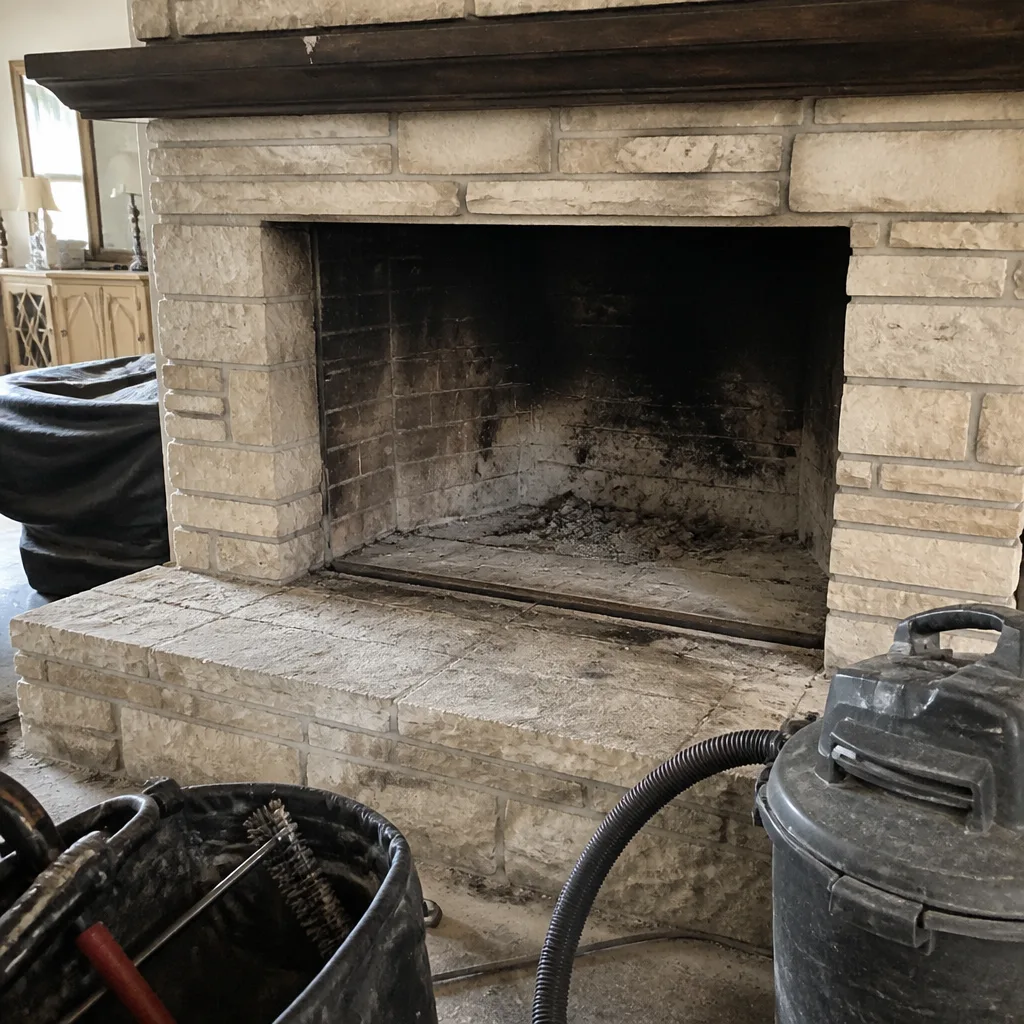
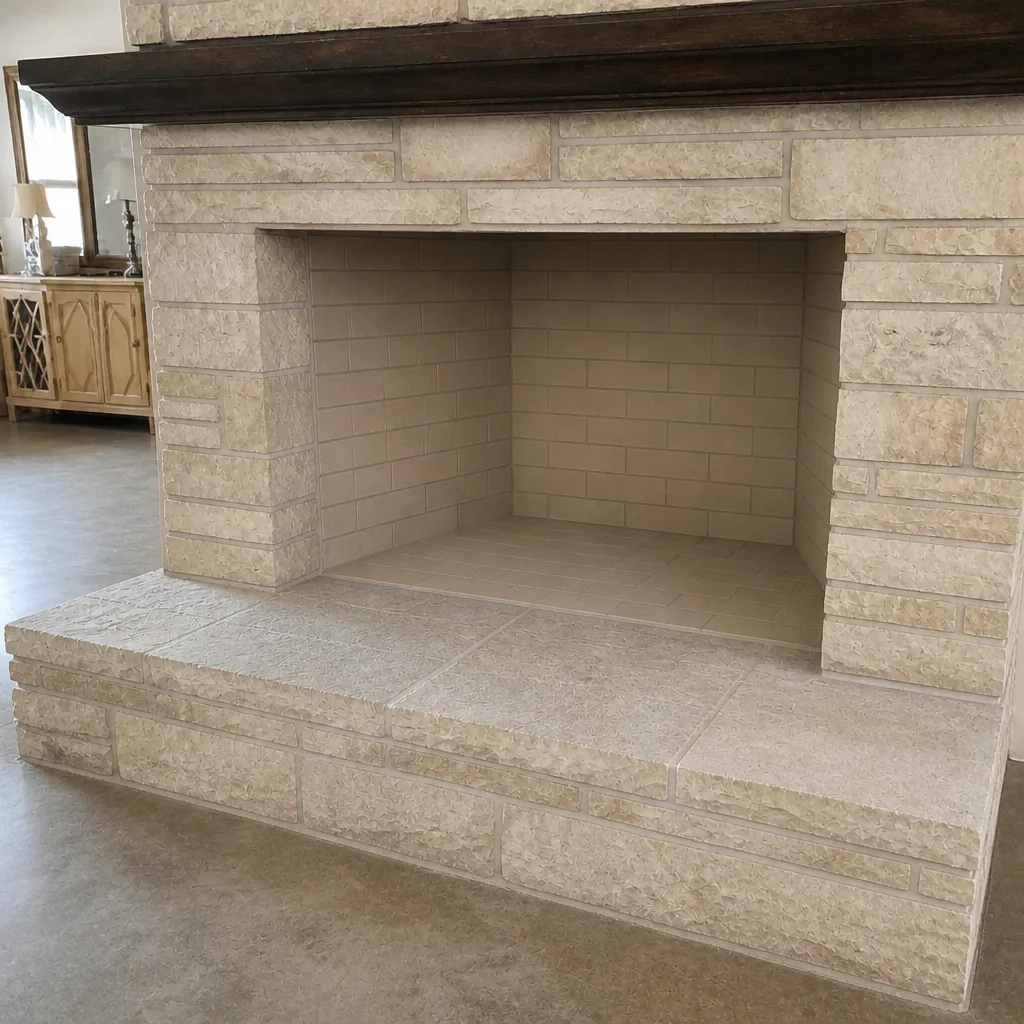
See the difference
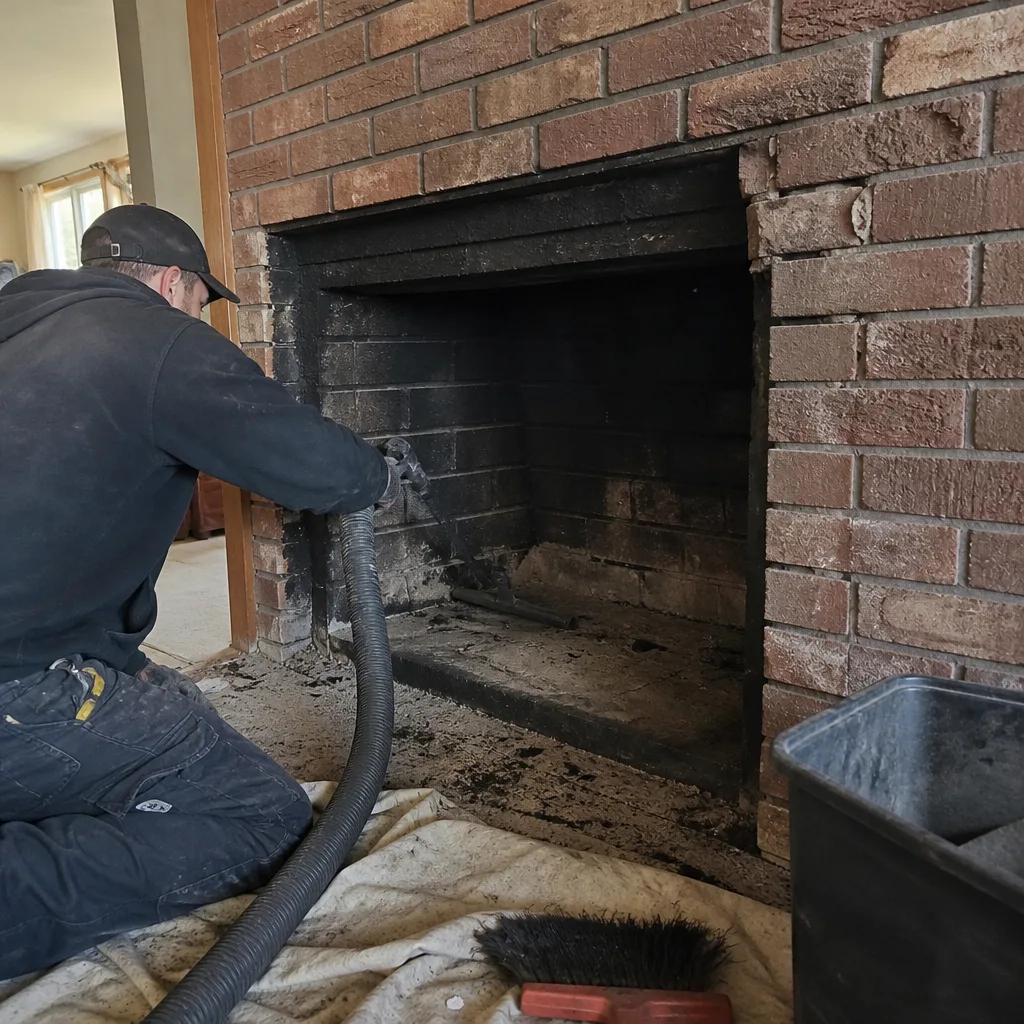 Before
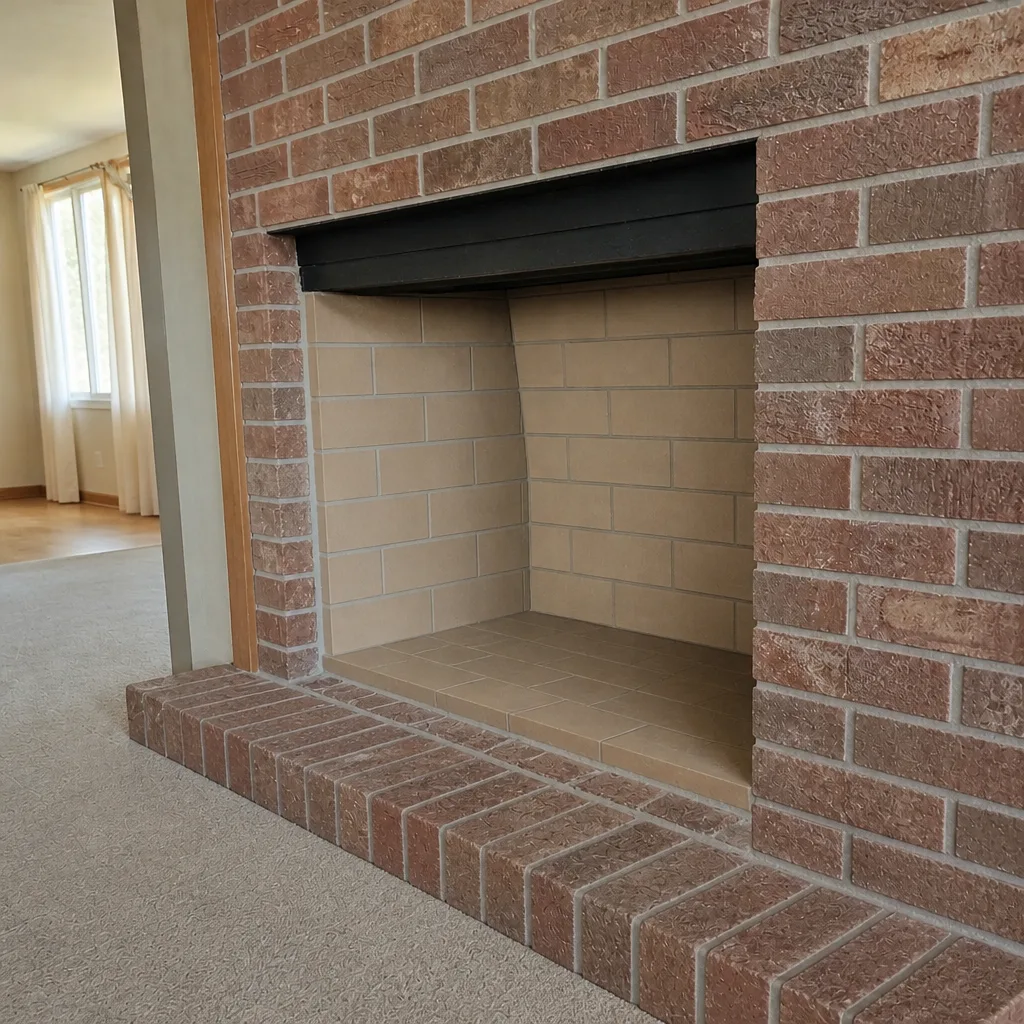 After
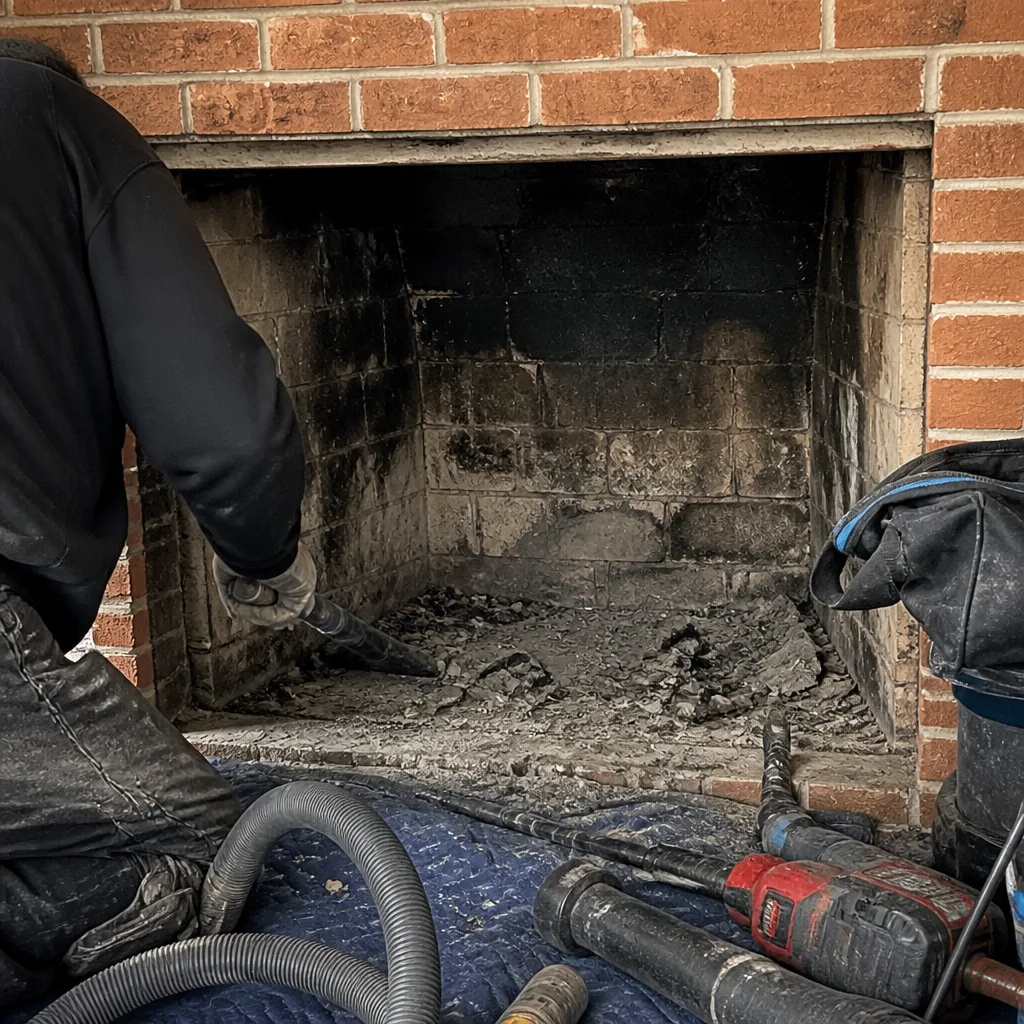 Before
 After
 Before
 After
When to Call a Professional
Some chimney situations are clear calls for a professional, not a wait-and-see. If you’ve never had a chimney inspection and you’ve been burning wood for a season or more, you’re overdue. If you’ve had a chimney fire, even a small one that you think put itself out, stop using the fireplace and book a Level 2 inspection. If your fireplace has visible staining, water tracks on the interior masonry, a rusted damper, or a crown that’s cracked or crumbling, a professional should see it before you burn again. If you smell smoke indoors when the fireplace is lit, or your carbon monoxide detector has ever sounded, that’s a same-day call. And if a contractor has recommended a liner or a full rebuild but you can’t see the evidence, get a second opinion before you spend. Parker Chimney Sweep offers free estimates in Parker. Call (844) 443-4897 to schedule an inspection.
Frequently Asked Questions
A chimney sweep in Parker is priced per job by a written estimate, and the estimate is free. The cost depends on the flue configuration, whether an inspection is included, and whether any repair is needed. Call (844) 443-4897 for an exact quote. Estimates are free.
You need a new liner if your inspection shows cracked flue tiles through to the masonry or a flue that can’t safely contain a chimney fire. You may not need a full liner replacement if the damage is surface-level, in which case HeatShield flue resurfacing can restore the tile without a full reline. The decision should follow the inspection evidence, not a phone call. Call (844) 443-4897 for an exact quote based on your inspection report.
A chimney should be swept when the creosote load reaches about 1/8 inch of accumulation, and annually for most wood-burning households. Gas appliances should still be inspected annually even though the creosote load is different. If you can’t remember your last sweep, book one before the next burning season. Call (844) 443-4897 to schedule.
Creosote accumulates in the flue with every fire, and glazed creosote is what sustains a chimney fire once it ignites. Skipping the sweep also lets water intrusion and cracked tiles go unnoticed, so the repair scope grows while the cause stays invisible. The risk is real but not a scare tactic; it’s why the inspection exists. Call (844) 443-4897 for an estimate.
CSIA certification proves the contractor passed a written exam; it does not, on its own, require supervised field experience. It’s one input, not the whole answer. In Parker, verify field experience with your specific chimney type plus insurance coverage and a written, itemized estimate before you book.
Ask for a current certificate of insurance naming the contractor as the named insured, and ask whether the policy covers fire-related claims and workers’ comp for the crew. Get the answers in writing. Any legitimate contractor can produce the certificate before the visit. Call (844) 443-4897 if you’d like to see ours before scheduling.
The Bottom Line
Hiring a chimney contractor in Parker comes down to a few checkable things. Know what the certification means, and know that a written exam is not the same as supervised field experience. Ask the four questions that separate a chimney specialist from a generalist, and don’t accept a one-line estimate. Verify insurance with a certificate, confirm the policy covers fire-related claims, and never authorize a liner or masonry repair before an inspection report is in your hands. Then choose a contractor who operates on the full system, from sweep to inspection to cap and crown, so one call resolves the whole problem. Our technicians have up to 8 years of experience, and we’re glad to be the ones you vet. If you’re in Parker and ready to get a second opinion, reach out to Parker Chimney Sweep and we’ll walk you through the process.
Call (844) 443-4897 for a free estimate. We answer 24/7. Fast dispatch from 7am to 7pm, Sunday through Friday.
Written by the team at Parker Chimney Sweep.