
Last updated November 23, 2026
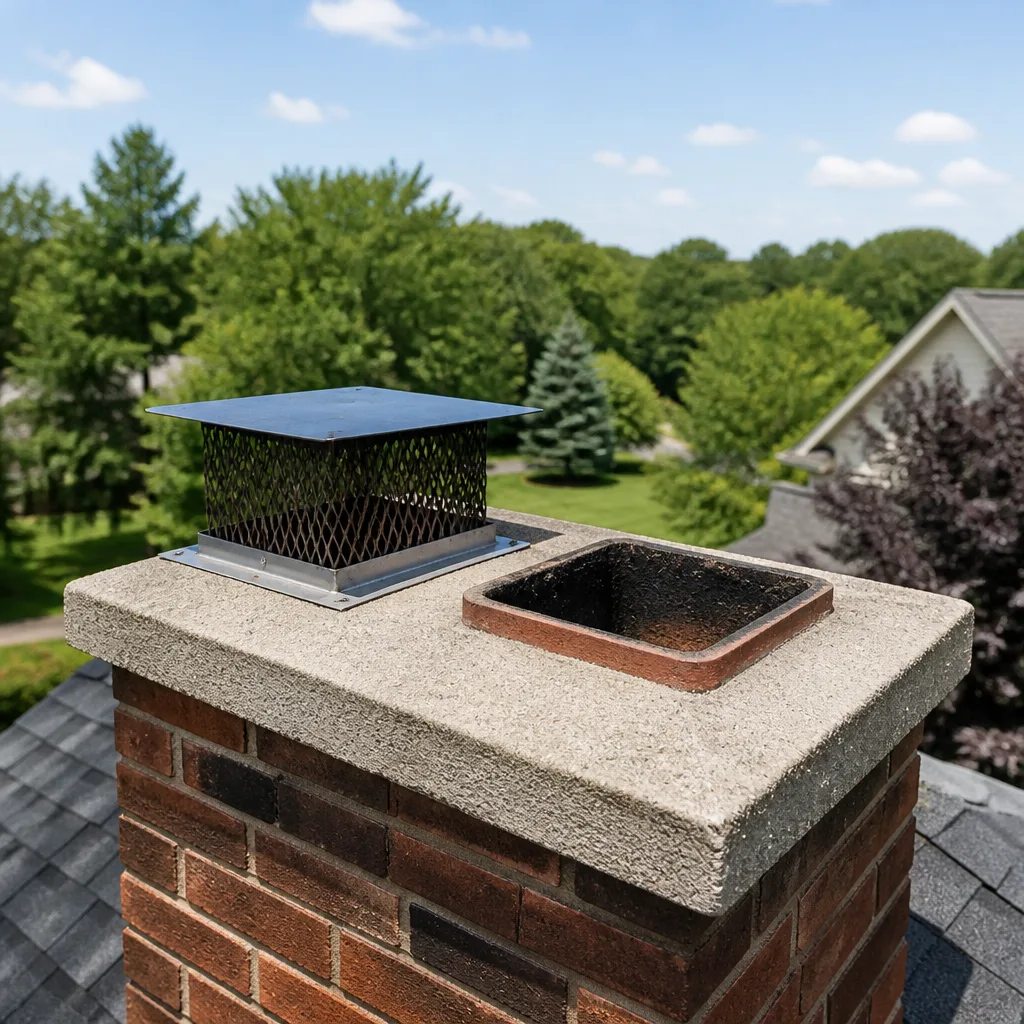 Sweep & inspection
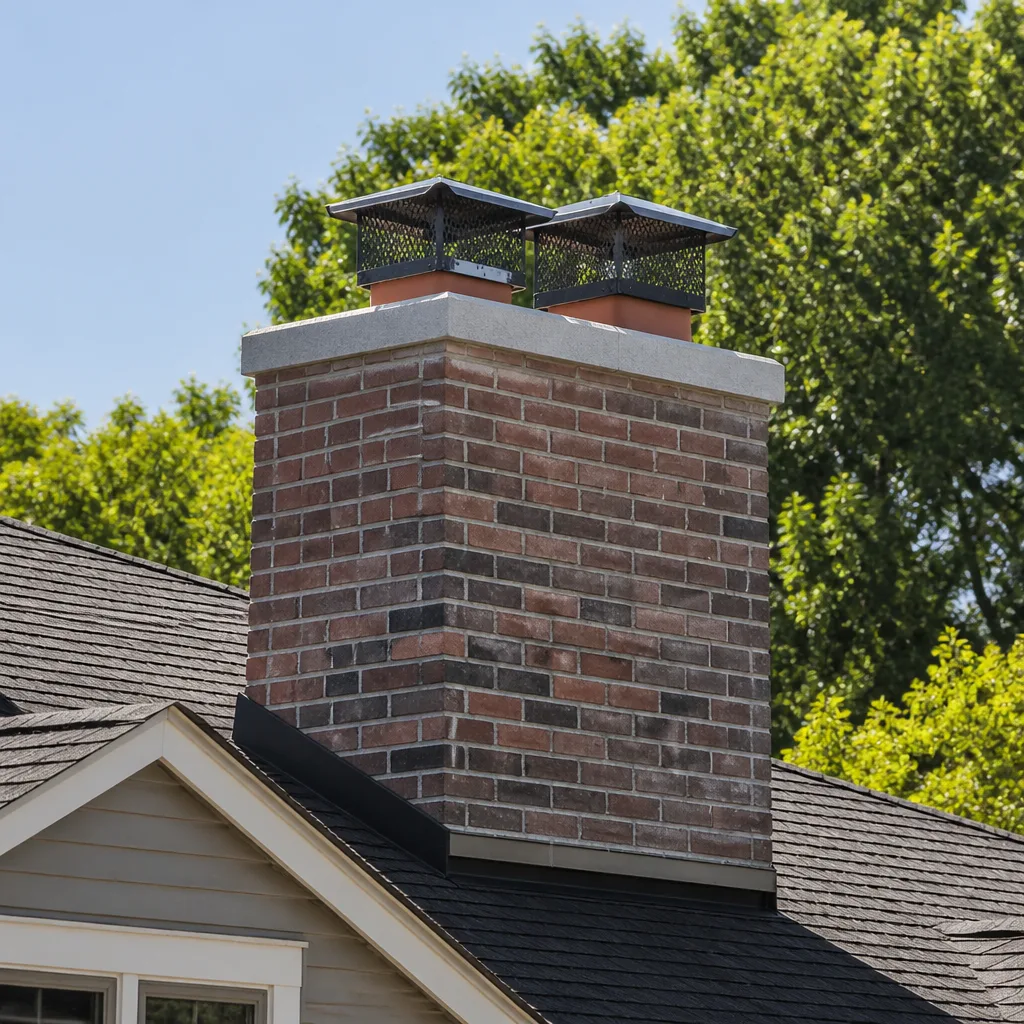 Caps & crowns
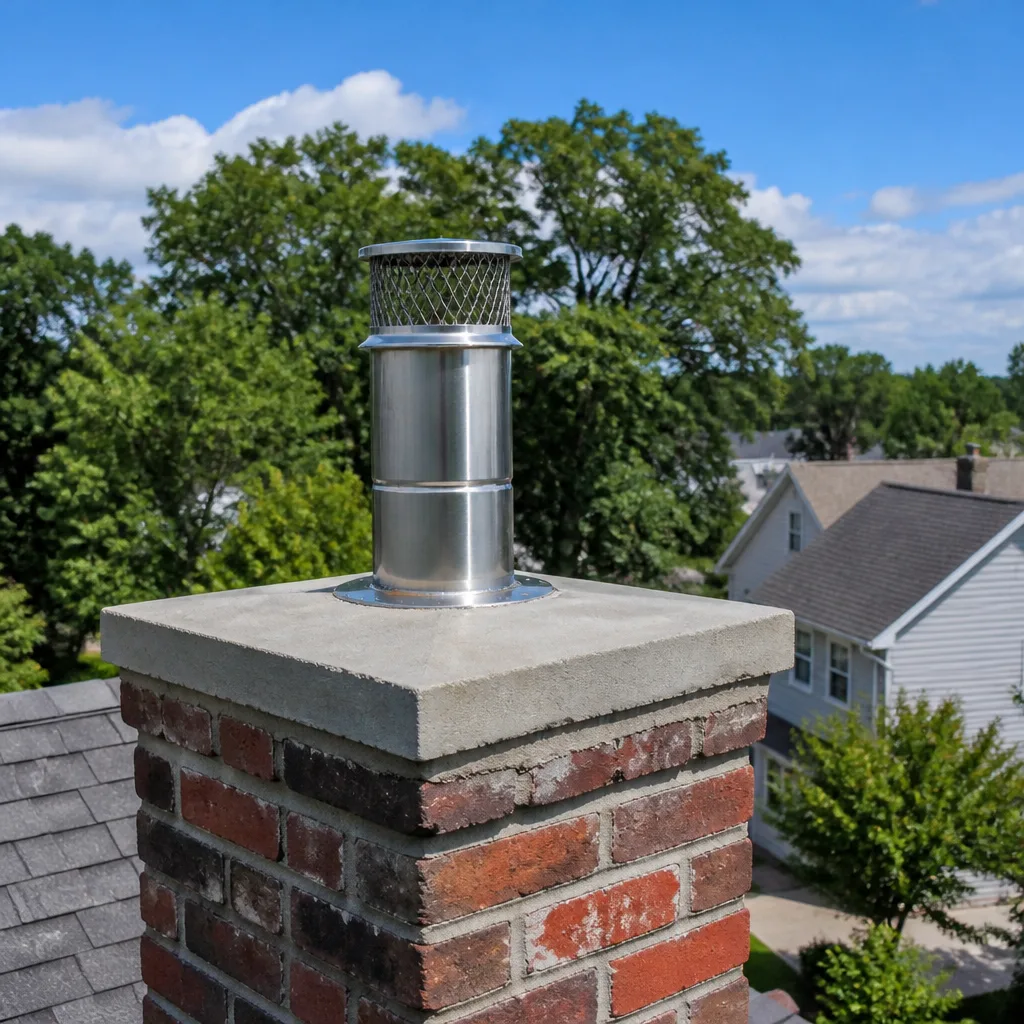 Flue relining
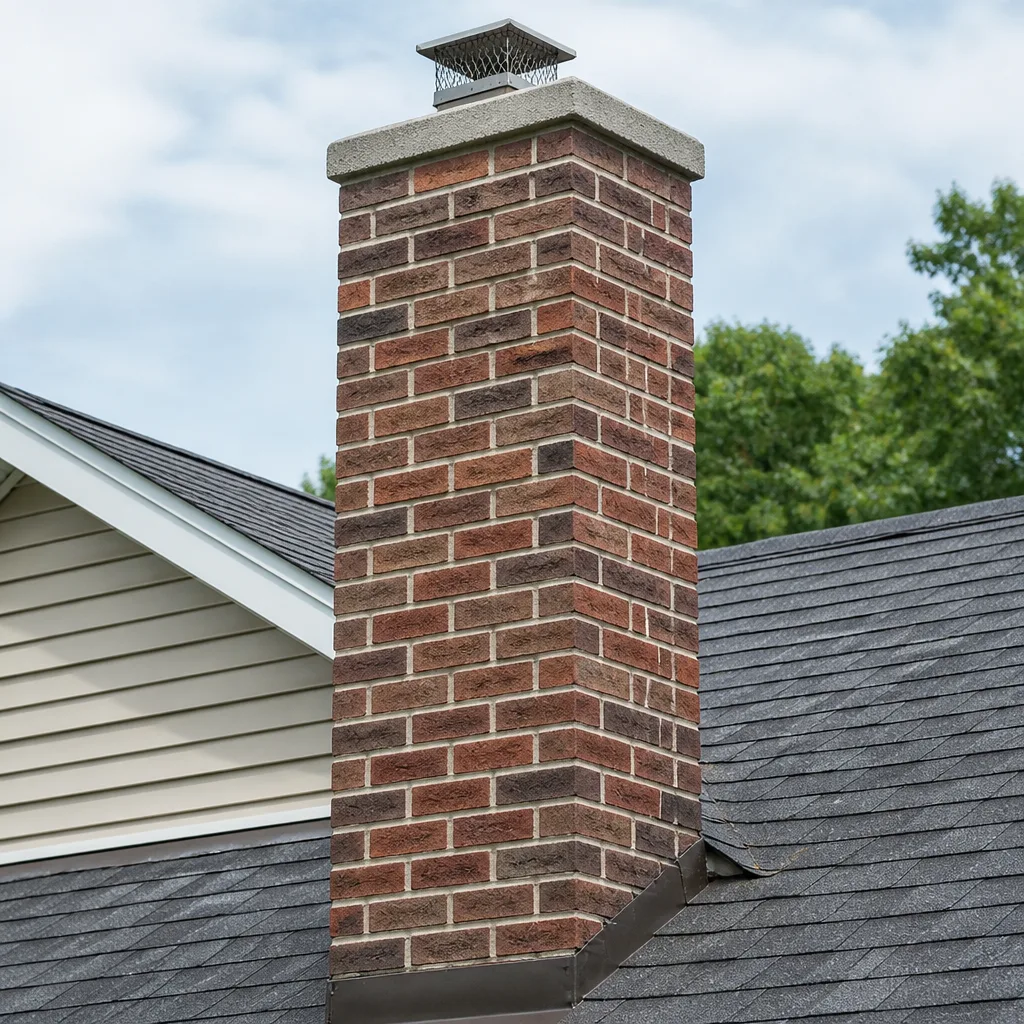 Masonry repair
 Gas fireplace service
Level 1 sweep and inspection to the NFPA 211 annual standard - flue, crown, cap, and flashing checked and photographed
Chimney sweep logs do not sweep chimneys. They loosen some creosote - which then falls where a brush and vacuum still have to collect it.
DIY vs Professional Chimney Cleaning: The Parker Homeowner’s Decision Guide
You can buy a chimney brush kit for around $60 online and physically move soot out of a flue. That part is true, and plenty of Parker homeowners do it every fall. But you cannot legally document a chimney’s condition for an insurance claim, and you cannot see a hairline crack in a liner tile with a flashlight and your phone camera. The real question isn’t whether brushing a chimney is hard. It’s whether the person holding the brush can recognize what the brush uncovers. This guide draws that line precisely: what a careful DIYer can safely do, where DIY starts costing more than it saves, and what changes when you’re heating a home at 5,900 feet in Parker.
Quick Answer
A competent homeowner can safely brush a lightly used, first-degree flue (a flue that serves a single open fireplace) with the right tools, provided the chimney has no known damage and the wood has been properly seasoned. A professional is the right call the moment the chimney is unfamiliar, was ever used with unseasoned wood, has a liner of uncertain condition, has served through several hard winters since its last inspection, or needs documentation for insurance or a home sale. In Parker, the elevation and the long, cold heating season tilt that decision toward professional inspection more often than in warmer, lower-altitude climates.
Styles & brands we work with
- Sweep & inspection
- Caps & crowns
- Flue relining
- Masonry repair
- Gas fireplace service
Table of Contents
- Capability vs. Liability: The Honest Way to Frame the Decision
- What a Competent DIYer Can Safely Do Without Professional Tools
- The Exact Point Where DIY Creates More Risk Than It Saves
- What Professional Video Inspection Reveals That No DIY Sweep Can Replicate
- The Liability Gap: Why the Inspection Record Matters
- A Complete DIY vs. Professional Cost Comparison
- Parker-Specific Factors That Shift the Risk Calculus
- A Step-by-Step Professional Inspection, Explained
Capability vs. Liability: The Honest Way to Frame the Decision
Most articles on this topic frame DIY chimney cleaning as a straight trade-off between saving money and staying safe. That framing is too simple, and it doesn’t help you decide anything. The more useful question is a two-part one: what is the homeowner actually capable of doing with the tools on hand, and what is the homeowner legally and practically able to be responsible for afterward?
Those are different things. Capability is about skill and equipment. Liability is about records, standards, and who can attest to what. A homeowner with a brush, a shop vac, and a properly sealed work area is quite capable of removing soot from a straightforward flue. But that same homeowner cannot produce a documented inspection that conforms to the NFPA 211 inspection standard, and cannot testify to a chimney’s condition during a real-estate transaction or an insurance claim in the way a trained inspector’s report can. The brush moves the creosote. The paperwork – or the absence of it – is what gets tested later.
This is the line this guide draws. On one side: brushing, routine soot removal, cap and damper checks, keeping the firewood dry. On the other side: inspection-grade documentation, the discovery of hidden liner and flue-tile damage, and the repair capabilities that follow from it. In our experience serving Parker homes, the confusion usually happens right at that edge.
You’ll also want to understand how a professional approach works before you compare it against a DIY one. A chimney sweep involves more than the brush; how the technician clears the connected appliance, checks the flue, and assesses what the sweep revealed is what you’re really comparing. Keep that in mind as you read the sections below.
What a Competent DIYer Can Safely Do Without Professional Tools
There’s a category of chimney work a careful homeowner can handle. It’s smaller than the internet makes it sound, but it’s real. Here’s what belongs on the DIY side of the line when the chimney is a simple, single open fireplace, the wood has been properly seasoned, and there’s no known damage.
Tasks that fit safely on the DIY side
- Brushing a first-degree flue. A flue serving one open fireplace, with no inserts or appliance connections and no known liner problems, is the simplest configuration. A properly sized poly brush and flexible rods can clear loose soot.
- Clearing the smoke chamber of loose debris. The area directly above the damper collects dust and soot; wiping or vacuuming the accessible parts is reasonable.
- Cleaning the firebox. Removing ash, cleaning the firebrick surface, and checking the refractory brick for obvious cracks.
- Checking the damper. Opening and closing the damper to confirm it moves freely and seats properly.
- Inspecting the cap and crown from the ground. Using binoculars from the yard, checking for obvious damage, missing screen, or animal activity.
- Managing wood. Storing firewood off the ground, covered, and properly seasoned. Seasoned wood is the single biggest factor in how much creosote a flue accumulates.
- Keeping combustibles clear. Keeping furniture, kindling, and the hearth area free of anything that could catch a stray ember.
Notice what isn’t on that list. It doesn’t include anything that requires getting on the roof. The roof is where the danger lives and where the professional’s training starts paying off. It also doesn’t include the inside of a flue tile, because a brush scrapes but doesn’t inspect.
Tools that are actually required for a safe DIY brush-out
- A correctly sized chimney brush – the wrong diameter leaves creosote behind and can damage the flue.
- Flexible rods of sufficient length to reach the top of the flue.
- A drop cloth and sealing plastic to prevent soot migration into the home.
- A HEPA-rated shop vacuum rated for fine soot particles.
- Respiratory protection and eye protection.
- A bright, focused light for inspecting what the brush reveals.
Estimated cost for a competent starter setup: $200 to $400 depending on size and tier. That’s before you factor in the time, the cleanup, and the disposal of the soot. We get into that more in the cost section below.
The Exact Point Where DIY Creates More Risk Than It Saves
The line is easy to state and easy to overstep: DIY becomes a bad idea the moment the chimney’s condition is uncertain and the brush is the only thing standing between you and a decision about that condition. You cannot see a cracked tile from below. You cannot see a damaged liner from below. You cannot see a bird’s nest wedged against the smoke shelf from below, and you cannot see a damaged crown from the yard even with binoculars.
Here are the specific conditions that push past the safe DIY zone:
- The flue has served through multiple hard heating seasons without a documented inspection. Parker winters run long, and a flue that has burned wood through several of them has likely accumulated creosote in the second-degree (glazed) or third-degree form somewhere in the system. A brush glides over glazed creosote; it doesn’t remove it.
- The fire has ever burned unseasoned wood or household trash. Both raise creosote deposition and change the risk profile of the flue.
- The chimney has a liner of unknown age or condition. If you don’t know what kind of liner is inside it, a brush can’t tell you whether it’s sound.
- The masonry has visible cracking, spalling, or white staining. All of these suggest moisture penetration that could mean hidden damage in the flue tile.
- The house is being sold. A buyer’s inspector will look for documentation; a DIY sweep produces none.
- There’s been a chimney fire, however minor it seemed. For obvious reasons, this one belongs in the professional’s hands.
When one of those conditions applies, the DIY brush isn’t just less effective – it can create a false sense of security. The homeowner finishes the job, sees a clean firebox, and assumes the flue is sound. It might be. But without an inspection, nobody actually knows.
For the kinds of damage that go beyond the brush’s reach, you’re in the territory of chimney repair – which is a deliberate phrase. It’s work that starts with inspection and moves to a repair only after the inspection has produced evidence.
What Professional Video Inspection Reveals That No DIY Sweep Can Replicate
A professional-grade video inspection uses a small camera run up the flue to record the interior of the entire chimney, from the firebox through the smoke chamber and out the top. It reveals what a brush cannot: the actual condition of the liner interior, flue tile joints, offset transitions, and the smoke shelf. It also produces a record that a homeowner can keep, share with an insurer, or attach to a home inspection report.
Here’s a short list of the specific findings a video inspection surfaces that a flashlight, phone camera, or brush cannot:
- Hairline cracks in clay flue tiles.
- Gaps or missing mortar in the flue tile joints (the “slip joints” in a traditional masonry chimney).
- Damage to a stainless steel liner, including pinhole corrosion or failed seams.
- Creosote deposits of the glazed variety that a brush will not dislodge.
- Obstructions: nests, debris, collapsed liner fragments, or a broken damper component.
- Improper transitions at offsets, which is where flue liners most commonly fail.
- The condition of the smoke chamber, which is difficult to see without camera access.
The documentation itself matters. When you sell a home in Parker, a buyer’s inspector will typically note if a chimney has not been recently inspected. When you file a claim after a chimney-fire-related incident, an insurer will typically want to know what the chimney’s documented condition was prior to the incident. A video inspection that produces a written report with photo or video evidence supplies that record. A homeowner with a brush and a shop vac does not.
In our experience, the single most common reveal in an older Parker masonry chimney is a flue tile that looks fine from below and shows a hairline crack on camera. That’s the finding a homeowner can’t get to with a flashlight. It’s also the finding that changes the next repair decision.
The Liability Gap: Why the Inspection Record Matters
If a chimney fire happens after a homeowner has cleaned the chimney themselves, the homeowner carries the entire record of that chimney’s prior condition – which typically means no record at all. That gap matters in three specific situations: an insurance claim, a home sale, and a future insurance renewal. Each has a different consequence and each is worth understanding before the fire, not after.
The insurance claim is the most immediate. Most homeowner policies don’t require periodic chimney inspections by written clause; what they require is that neglect not be the cause of the loss. If a chimney fire or carbon monoxide incident traces back to a flue that had been maintained without documentation for years, the insurer may dispute coverage. A professional inspection with a written report shifts that conversation entirely – not because it guarantees coverage, but because it establishes what the chimney’s condition was and when.
The home sale is the second situation. A buyer’s inspector who flags “chimney not inspected” typically turns into a negotiation point. A recent professional report short-circuits that. It also short-circuits the buyer’s worry about what might be inside the flue, because the report literally shows them.
The renewal is the third and least obvious. Some insurers increasingly ask for chimney documentation as part of a property-condition review. The homeowner who can produce a professional report without scrambling is in a simpler position than the homeowner who cannot.
None of that means a homeowner who brushes their own chimney is doing something negligent. A clean flue is better than a dirty one under any circumstances. What it means is that documentation is a separate product from cleaning, and a brush doesn’t produce it. The two are not interchangeable, and this is the honest distinction the DIY-versus-professional conversation usually skips over.
If the inspection does surface damage that needs attention, the next step is typically fireplace repair or a flue resurfacing – but those are downstream decisions. The inspection comes first.
A Complete DIY vs. Professional Cost Comparison
A brush kit is not the whole DIY cost. Here’s the honest picture once you add the tools you’ll actually need, the cleanup supplies, the time, and the disposal. All figures below are typical estimates for the Parker market. The written estimate from any local professional is what sets the final price on the professional side.
DIY supplies (a competent setup)
- Correctly sized chimney brush and rods: $120 to $200 (you don’t already own this)
- HEPA-rated shop vacuum (if not already owned): $100 to $200
- Drop cloth, sealing plastic, tape: $20 to $40
- Respiratory and eye protection: $20 to $40
- Time investment: a half-day or more for a first attempt, plus cleanup
- Disposal: soot and creosote are messy but not hazardous in most jurisdictions when swept into the trash; plan for a significant cleanup
- Storage: the brush, rods, and vacuum take up garage shelf space between sweeps
The realistic total for a homeowner starting from zero: $250 to $480 in the first year, plus the time. By year two, the supplies are already owned, which is where the DIY cost story starts to look better on paper.
Professional service (what the price typically includes)
- Sweep and routine inspection: typically $180 to $340 for a standard single-flue chimney in Parker
- Camera inspection with written report: typically bundled into the sweep in most cases, or quoted separately depending on the chimney
- Minor repairs (cap replacement, crown repair): typically $250 to $700 depending on scope
- HeatShield flue resurfacing: quoted per job; it’s a restoration method rather than a reline, so it’s typically less costly than a full liner replacement
- Liner replacement (if needed): typically $2,000 to $5,000+ depending on length, diameter, and configuration
Notice the asymmetry. The DIY cost is front-loaded and repeatable across the years you own the house. The professional cost is per visit and it carries a written report. Comparing “$300 for a brush kit” against “$250 for a sweep” isn’t really comparing the same thing, because the sweep includes an inspection and the brush kit doesn’t.
When DIY genuinely saves money
The DIY math pays off when the chimney is straightforward, well documented, and healthy – meaning the homeowner knows the flue condition already, keeps the firewood properly seasoned, and brushes out the soot at the right intervals. In that regime, an annual brush-out is real work but not complicated work. The DIY cost story becomes honest as soon as the homeowner accepts that the inspection component is being skipped, and either gets it periodically from a professional or accepts the documentation gap as a calculated risk.
When professional service pays for itself
The professional math pays off the first time an inspection finds a hairline flue tile crack that would have gone unnoticed. It pays off again at resale, when the report replaces a buyer’s worry. And it pays off any season a homeowner avoids the roof entirely, which is the season they’d have slipped up there cleaning a flue they couldn’t see inside of anyway.
Parker-Specific Factors That Shift the Risk Calculus
Parker isn’t a generic chimney market, and the local conditions change the DIY-versus-professional calculus in specific ways. Elevation, wood choice, and fire frequency all shift what’s typical for a chimney in this town.
Elevation
Parker sits at roughly 5,900 feet above sea level. Chimneys draft differently at elevation – the reduced air density affects the draft a fire generates, which can mean a wood fire burns cooler and incompletely relative to what it would produce at sea level. Cooler, more incomplete burns deposit more creosote. A Parker flue accumulates creosote faster than its lower-altitude equivalent, which changes the safe brushing interval and raises the risk of the glazed creosote a brush can’t fully remove.
Local wood types
Most firewood sold in the Parker area is either local softwood (piñon, pine, juniper) or transported hardwood (oak, ash, birch). Softwoods burn hot but season quickly and produce more creosote when burned before fully dry. Hardwoods produce less creosote per cord but cost more and take longer to season in this climate. What you burn affects how often the chimney needs sweeping, which affects how much of the annual maintenance a homeowner can reasonably keep on the DIY side.
Fire frequency
A house in Parker with an open fireplace used multiple nights a week through the heating season can burn through a cord or more of wood a year. That’s enough for meaningful creosote accumulation on an annual basis. The “sweep yearly” advice you’ll see online was written for a generic climate; a Parker household burning wood through a long heating season should treat it as a minimum rather than a target.
The combination
The combination of high elevation, softwood availability, and a long heating season is what tilts the decision. It doesn’t mean every Parker chimney needs professional work every year. It does mean a homeowner who’s brushing their own flue should be honest about whether they can also recognize the moment the flue has crossed into risk. Most can’t without an inspection, and that’s the whole argument.
If you’re connecting to our service area in Parker, professional-grade materials matter more here too. The same chimney repair that’s a cosmetic fix in a milder climate is a structural issue at this elevation, where freeze-thaw cycles are harder on masonry. Liners here benefit from being specified with the local temperature swings in mind; the industry names you’ll hear are DuraFlex, HeatShield, Copperfield, and Famco, which is why our company works with those lines rather than big-box substitutes.
A Step-by-Step Professional Inspection, Explained
A professional inspection follows a defined sequence because the chimney is a system, and each part affects the others. What follows is a short explanation of how a typical inspection in Parker works. It’s not a DIY sequence – the point is to show you what the inspection covers so you can recognize the difference between “we brushed it” and “we inspected it.”
- Intake and system review. The technician confirms what’s connected to the chimney, what’s been burned in it, and whether there are any known issues. This establishes what the inspection is looking for.
- Firebox inspection. The firebox is checked for cracks in the refractory brick, damaged panels, and evidence of heat damage.
- Damper check. The damper is confirmed to open, close, and seal correctly.
- Smoke chamber inspection. The smoke chamber – the angled section above the damper – is checked for buildup and damage. This is the part most cameras and most brushes can’t reach.
- Flue sweep. The flue is mechanically swept with a correctly sized brush, clearing soot and loose creosote.
- Camera inspection of the flue. A camera is run the full length of the flue, recording what the brush passed over. This is where hairline liner cracks, joint gaps, and glazed creosote are identified.
- Crown and cap inspection. The crown (the masonry top of the chimney) and the cap (the screened lid on top) are checked for cracks, missing screen, animal activity, and proper fit.
- Flashings and masonry. The exterior of the chimney is checked for flashing damage, joint separation, and spalling brick.
- Written report and findings. A written report covers what was found, what was repaired, and what needs attention – now, later, or at all.
- Repair recommendations, when warranted. Damage found in the inspection determines whether HeatShield resurfacing, a cap replacement, a crown repair, or a liner replacement is the right next step.
The inspection is what makes the difference between a cleaned chimney and a verified one. When the report comes back clean, the homeowner has a documented baseline. When it flags an issue, the homeowner has a documented finding and a clear next step.
Common Mistakes to Avoid
- Buying a brush kit and assuming the chimney is healthy. A brush clears soot; it doesn’t check for damage. Treat the brush as a cleaning tool, not an inspection.
- Cleaning only once a year on a fixed schedule regardless of use. Parker homes that burn wood intensely through a long heating season typically need more frequent sweeps; homes that burn occasionally may need less. Sweep based on use, not the calendar.
- Skipping the cap check. A missing or damaged cap lets water and animals into the flue. In a freeze-thaw climate like Parker’s, that cap is protecting the masonry column from frost damage as much as anything.
- Not adding up the true cost of DIY. The brush, the HEPA vacuum, the drop cloth, the time, and the disposal stack up. Compare the whole picture, not the kit price against a professional quote.
- Treating a “clean-looking” firebox as evidence the flue is sound. The firebox is the bottom of the system. The damage usually happens higher up, where the brush can’t see.
- Ignoring a chimney that’s been quiet for years. Dormant chimneys aren’t safe chimneys; they often accumulate damage from water intrusion and animals. An inspection before the first fire of the season matters more than an annual brush-out of a chimney you’re not using.
- Assuming a professional cleaning is the same as an inspection without confirming it. Some sweep services clean without a video inspection. Ask directly and get the scope in writing – the whole point of hiring out is the inspection component, so make sure it’s included.
See the difference
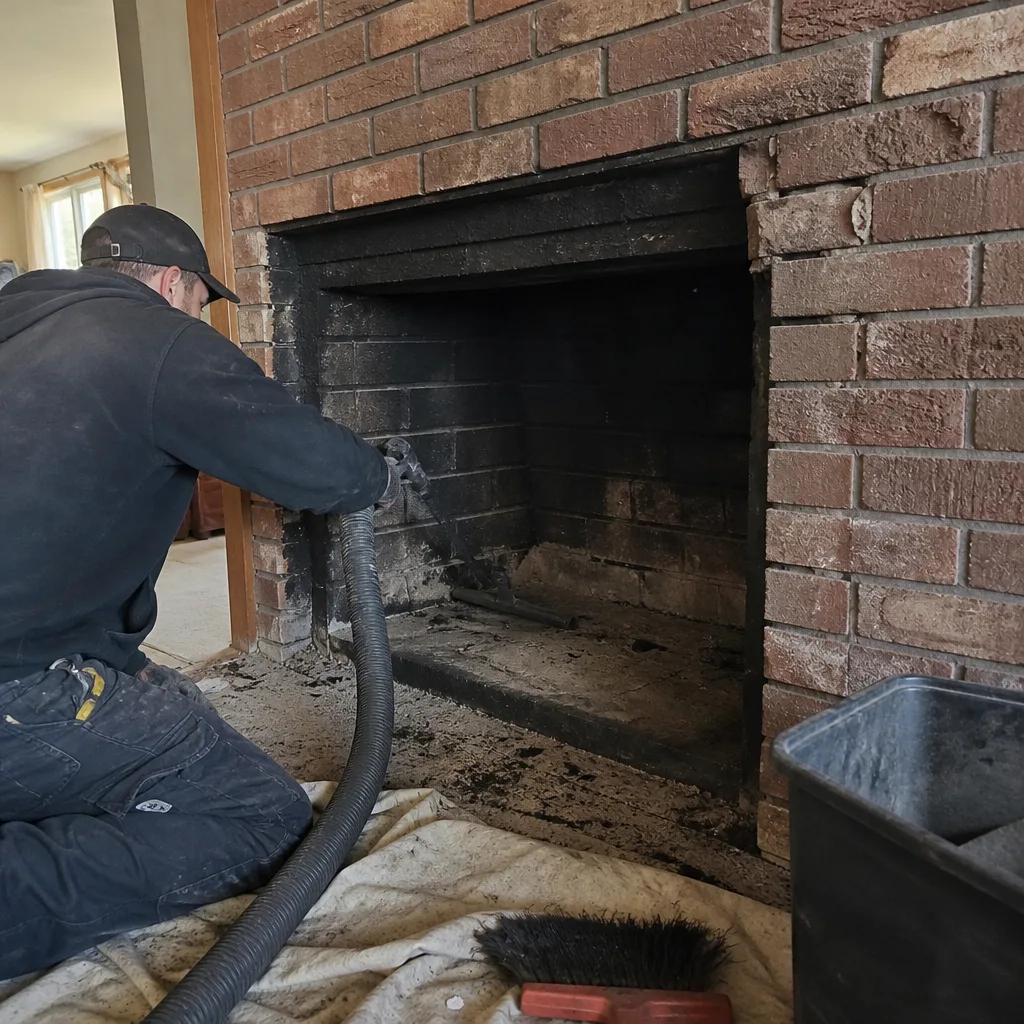 Before
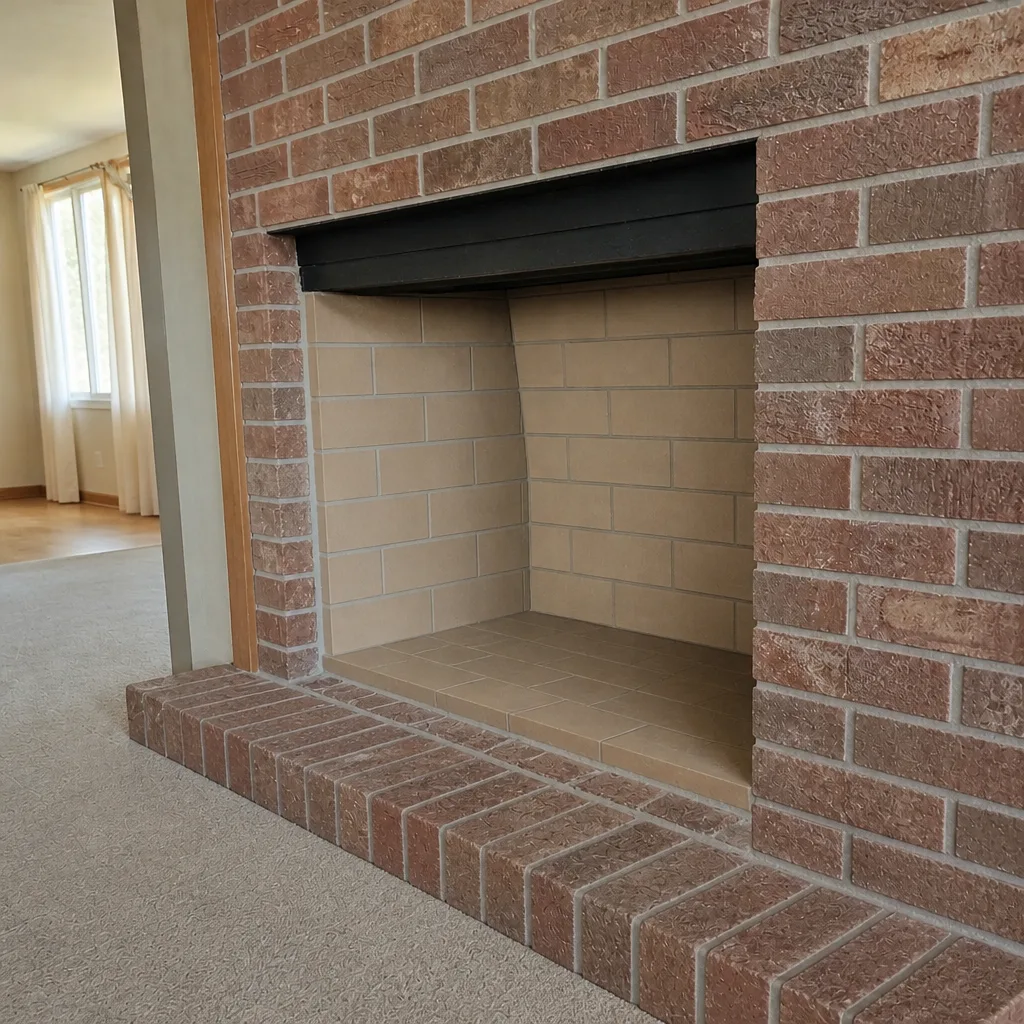 After
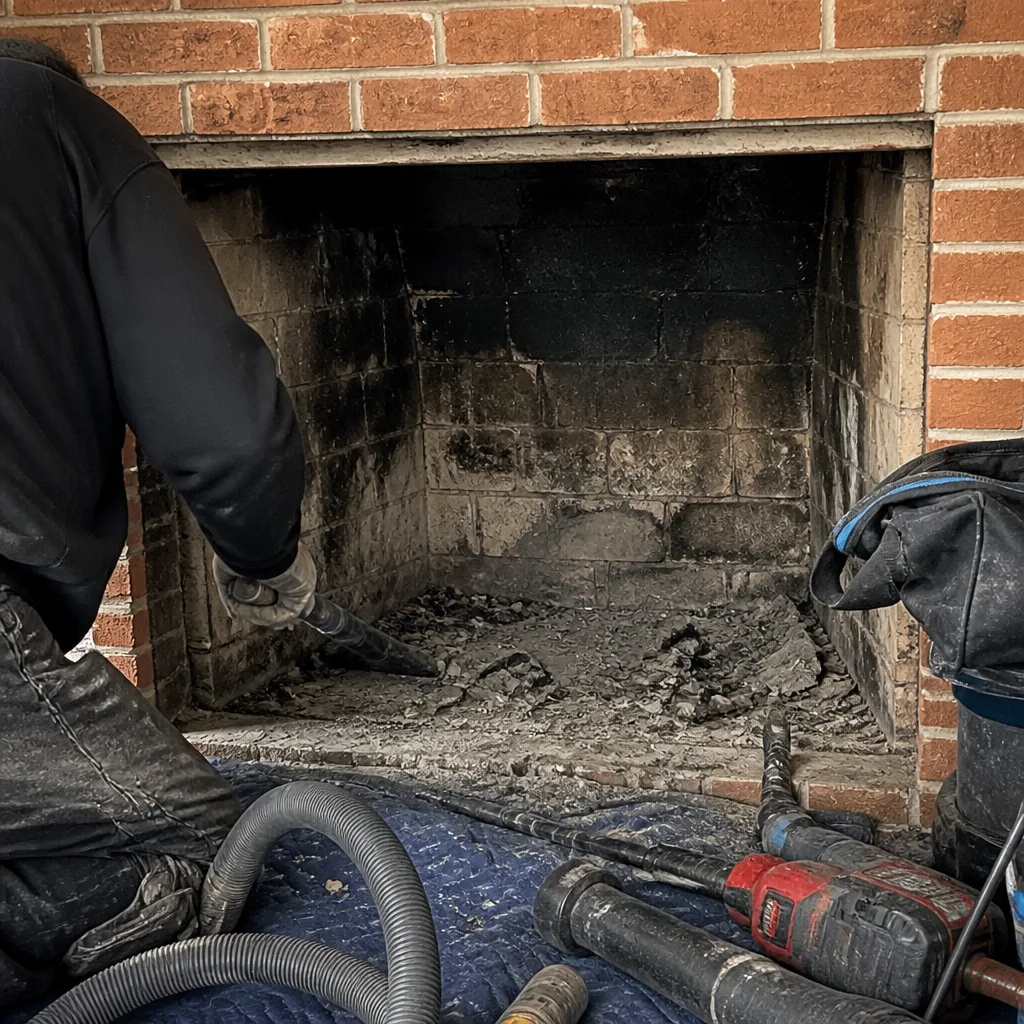 Before
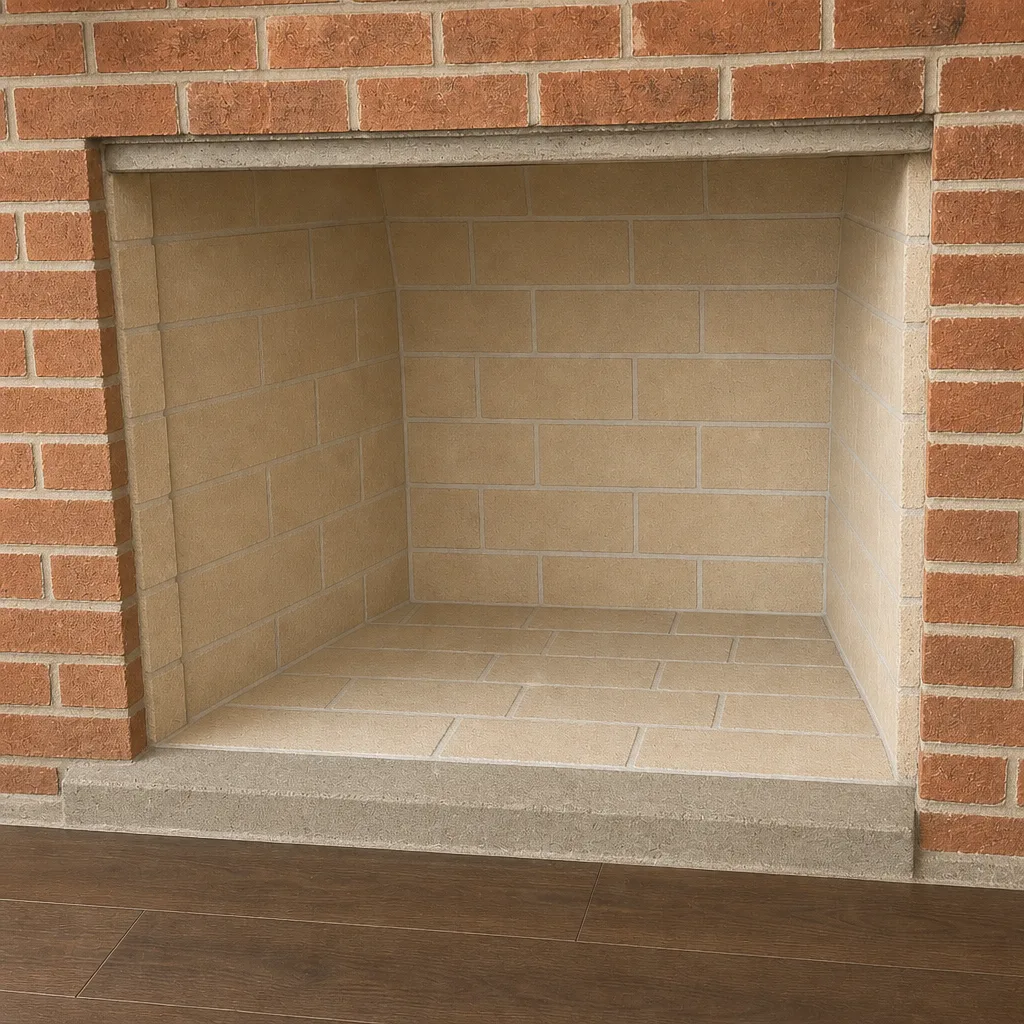 After
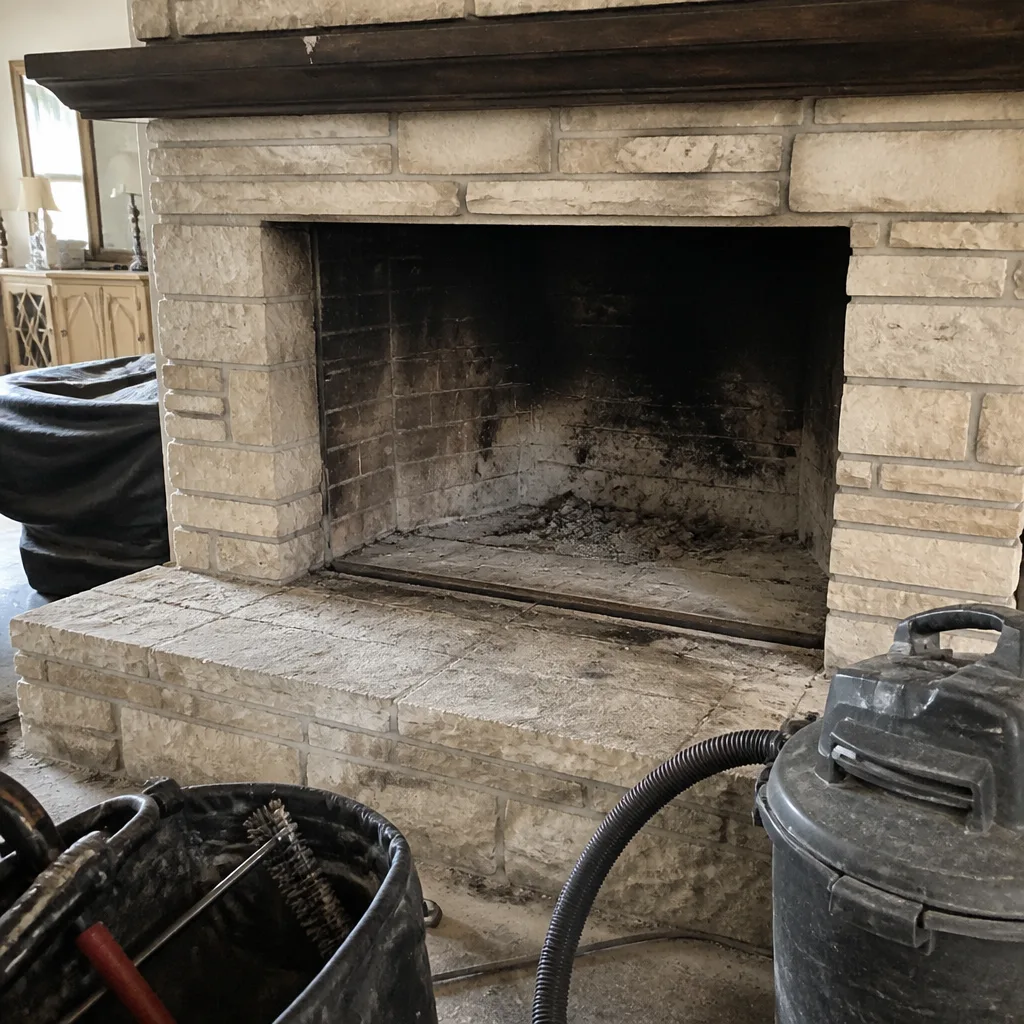 Before
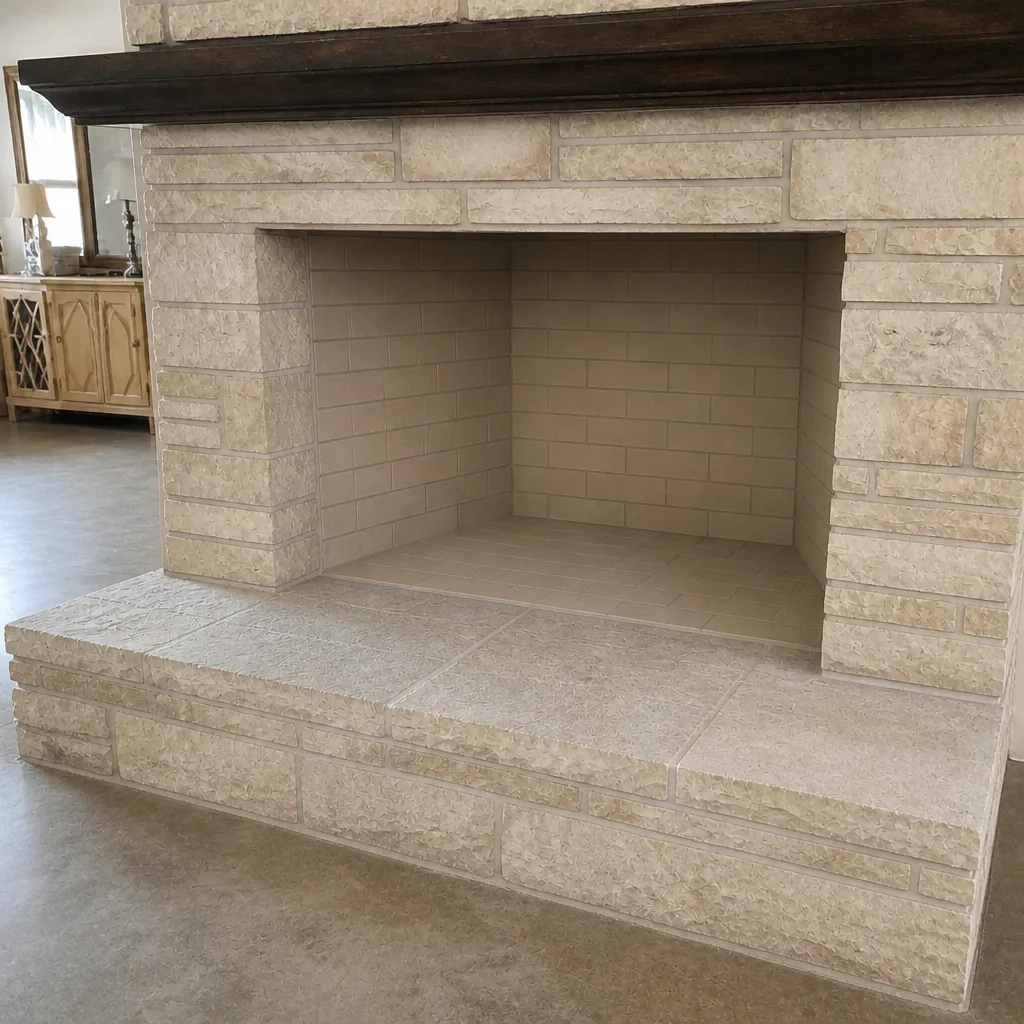 After
When to Call a Professional
If any of the following applies, contact a professional rather than attempting the job yourself: you’ve never had the chimney inspected, you don’t know what’s inside the flue, the chimney has served through several heating seasons without documentation, there’s a known or suspected chimney fire in the home’s history, the house is being sold, or any masonry or cap damage is visible from the ground. On top of that, any chimney connected to a gas appliance belongs in professional hands because carbon monoxide risk is involved, and a brush can’t detect the causes.
Our technicians have up to 8 years of experience with the specific inspections and repairs that follow from one. If you’re ready to get the chimney properly assessed, Parker Chimney Sweep offers free estimates in Parker – call (844) 443-4897. We answer 24/7. Fast dispatch from 7am to 7pm, Sunday through Friday.
Frequently Asked Questions
You can clean your own chimney if it’s a straightforward, well-documented, first-degree flue in good condition. What you can’t do is produce the inspection that documents its condition. If the chimney is unfamiliar, has served multiple seasons without an inspection, or will be involved in a sale or insurance situation, the professional inspection matters more than the sweep, and the sweep is included in that.
You know by having it inspected. Brushing clears soot; the question of whether the chimney needs more than brushing is answered by what the inspection finds. A clean chimney that shows good flue tiles, a properly seated cap, and sound masonry needs only the routine sweep. A chimney with hairline liner cracks, glazed creosote, or joint gaps needs the appropriate repair. Without an inspection, that determination can’t be made reliably.
DIY brushing is reasonably safe in Parker if the chimney is a simple, single-flue configuration with a known good liner, and you stay off the roof. The bigger question is whether a first-time DIY brush-out of a chimney at 5,900 feet, on a flue that has burned local softwood through a long heating season, is likely to catch the creosote risk underneath. Elevation reduces draft quality and softwood increases creosote, which together make Parker chimneys accumulate deposits faster than lower-altitude equivalents.
Acceptable is the wrong word; the real question is documented. An insurer will typically look at whether the chimney’s condition prior to any incident was maintained and, in the event of a disputed claim, whether there’s evidence of that maintenance. A professional inspection report supplies that evidence. A DIY sweep with no record doesn’t. Whether any specific policy responds to a claim depends on its terms, but the record piece is entirely in the homeowner’s control, and only one path produces it.
The answer depends on fire frequency and wood quality more than on a fixed interval. A home that burns several nights a week through the heating season should treat an annual sweep as a minimum, because creosote deposits build faster than a once-a-year schedule implies at this elevation and with softwood. Homes burning occasionally can go longer between sweeps but should still have an annual or biennial inspection to confirm the flue hasn’t developed damage from the off-season.
For a homeowner starting from zero, a full DIY setup – correctly sized brush and rods, HEPA vacuum, drop cloths, protection – typically lands between $250 and $480 in the first year. That’s before the half-day of work, cleanup, and disposal. After year one the tools are owned and the marginal cost drops, but so does the marginal value of comparing it to a $250 professional sweep, which includes an inspection the DIY path can’t replicate. Call (844) 443-4897 for an exact quote – estimates are free.
The Bottom Line
The DIY-versus-professional chimney cleaning question isn’t really a cost question. It’s a capability question and a liability question, running in parallel. A careful Parker homeowner can brush a first-degree flue with the right tools, provided the chimney is well documented and the wood is properly seasoned. What they can’t do is produce the inspection that documents the chimney’s condition for an insurer, a buyer, or a future repair decision. In a town at 5,900 feet, with softwood in the woodpile and a long heating season, that documentation piece carries more weight than it does in a milder climate.
If the chimney is unfamiliar, has gone seasons without an inspection, or has any visible damage, the professional path is the honest one. Inspect before you repair – that’s the sequence professionals follow, and it’s the one that turns a guess about the flue into evidence. From the firebox to the crown, a chimney is a system; one company, start to finish, and the whole system gets looked at.
Our company works with professional-grade brands, including Parker Chimney Sweep, because the parts matter as much as the assessment. If HeatShield resurfacing is the right call, or a Famco or Copperfield cap and crown installation is what’s needed, one company can resolve it without a handoff. Chimney sweeping, inspection, fireplace repair, chimney repair, and cap and crown – all in one scope, and built to last the season.
If you’ve been putting off the inspection piece, or you’re ready to know what’s actually inside your flue, call Parker Chimney Sweep at (844) 443-4897 for a free estimate. We answer 24/7. Fast dispatch from 7am to 7pm, Sunday through Friday, with written estimates before any work begins.
Written by the team at Parker Chimney Sweep.